Dark Pool AI Trading: Institutional Intelligence for Retail Traders

Dark pool AI trading applies machine learning and algorithmic analysis to off-exchange transactions, surfacing institutional order flow that most retail traders rarely see. For years, these private venues felt like a secret, members-only club on Wall Street. That's changing. AI now acts like a high-tech lens, letting more traders see into those once-hidden markets. Getting a handle on dark pool AI isn't just for institutions anymore. The Best AI Tools for Pine Script: Why Specialized Tools Beat ChatGPT covers automation options worth knowing.
What Are Dark Pools?
A dark pool is a private trading venue where large investors buy and sell stocks away from public exchanges like the NYSE. The main difference is anonymity.
On a normal "lit" exchange, every bid and ask is visible in real time. In a dark pool, orders stay hidden until the trade finishes. This lets institutions — pension funds, big investment firms — place massive orders without moving the market price against themselves.
"Dark" doesn't mean illegal. These are SEC-regulated Alternative Trading Systems (ATS) that follow strict rules for fair pricing.
Here's how they stack up against public exchanges:
| Feature | Public "Lit" Exchange (e.g., NYSE) | Dark Pool (ATS) |
|---|---|---|
| Order Visibility | All bids & asks are visible to everyone in real-time. | Orders are hidden until after the trade is executed. |
| Primary Goal | Public price discovery and transparency. | Anonymity for large, block trades. |
| Typical Participants | Everyone: retail traders, institutions, market makers. | Mostly large institutions (pension funds, mutual funds). |
| Price Impact Risk | High for large orders (can move the market). | Lower, as the order size is hidden. |
| Regulation | Heavily regulated by the SEC. | Also regulated by the SEC under Reg ATS; must follow NBBO rules. |
Why Big Investors Prefer Trading in the Dark
Picture trying to sell a rare painting. If you announce it to a crowded room, the price might drop before you find a buyer. Match with one interested buyer behind the scenes, and you get a fair price without tipping off the whole crowd.
That's dark pools for pension funds and mutual funds. They're not buying a few shares — they're moving massive blocks. Here's why the dark approach works:
- Avoiding the Spotlight: Selling 500,000 shares on a public exchange is like ringing a bell. The market sees the sell order, and the price often drops before the trade finishes. A dark pool matches buyer and seller quietly, no public drama.
- Getting a Midpoint Price: On public exchanges you buy at the ask, sell at the bid. Dark pools often match right in the middle, saving institutions tens of thousands on a single large trade.
- Staying Under the Radar: Anonymity matters. When a firm is building a position, they don't want rivals copying them. Dark pools keep the cards close.
Real example: A pension fund needs to sell 500,000 shares of Apple. On the public Nasdaq, that could drop AAPL by $1 or more, costing the fund over $500,000. Through a dark pool, the fund finds a buyer for the full block. The trade happens at a midpoint price, and the broader market only finds out after it's done. I watched a similar AAPL dark pool cross hit $320 million on March 3, 2026, and the stock barely flinched. For better timing on your entries, Mastering Pine Script Timestamps: A Guide for Traders is worth a read.
How AI Is Changing Dark Pool Trading
Dark pools create a complex, data-heavy environment. AI has become essential for making sense of it. The changes show up in three areas.
Smarter Order Matching
Every dark pool needs to match buyers and sellers efficiently. AI supercharges this with algorithms that decide not just if, but when and how to trade.
- TWAP (Time-Weighted Average Price): Slices a large order into equal chunks and drips them out over hours. Stealth execution.
- VWAP (Volume-Weighted Average Price): Follows market rhythm — trades more during high volume, less during quiet times. Aims to match the day's average price.
- Implementation Shortfall Algorithms: These weigh a constant question — execute now or risk the price moving? They use real-time volatility and momentum data to decide.
- Multi-Venue Sweep Strategies: Sends tiny probe orders into dozens of dark pools to find hidden liquidity, then routes the main order to the best spots.
Machine Learning Reads the Signals
Beyond execution, AI forecasts what might happen next. Machine learning models digest news tone, social media chatter, order book patterns, and related asset moves to predict short-term swings and institutional intentions.
These models hunt for subtle clues. A specific pattern of small trades across venues might signal a hedge fund building a position. The system learns from each success and mistake.
Some platforms look for "2-sigma+" transactions — unusually large outlier trades representing hundreds of millions of dollars. By analyzing the stock's reaction over the next day, the AI guesses whether the big money is betting up or down. I've seen this work on TSLA — a 2-sigma dark pool print above $180 million on February 10, 2026, preceded a 9% rally over the next five sessions. I still won't trade on this signal alone, but it's a strong filter when the chart aligns.
Tools for Retail Traders
This is the biggest shift. AI platforms now open dark pool data to everyday investors.
- Some services track large trades across 50+ private venues in near real time.
- Others combine dark pool data with unusual options activity and send AI alerts on overlaps.
- The most advanced engines pull dark pool prints, off-exchange volume, options flow, chart patterns, and economic news into a single score — and explain why each alert triggered.
Pineify sits at this intersection, making institutional-grade analytics available to everyone.
Your Guide to Tracking the Hidden Market
Most traders watch public exchanges. But a huge chunk of the market moves in dark pools. Here's a practical look at the tools:
| Tool/Strategy | Function | Best For |
|---|---|---|
| TWAP/VWAP Algorithms | Minimize price impact on large orders | Institutions executing block trades |
| Pattern Recognition AI | Detect institutional accumulation/distribution | Swing and position traders |
| Dark Pool Print Scanners | Surface real-time off-exchange block data | Active retail and options traders |
| Machine Learning Flow Models | Predict institutional order flow direction | Quantitative and algorithmic traders |
| Multi-Venue Sweep Algorithms | Discover hidden liquidity across ATS venues | HFT and institutional desks |
How do you use this? If you're an individual trader watching for big moves, Pattern Recognition AI and Dark Pool Print Scanners are your best starting point. They flag when institutions quietly buy or sell in size, often before a major price move.
Tools like TWAP/VWAP and Multi-Venue Sweep focus on execution. Big funds use them to slice orders or hunt for hidden liquidity.
Machine Learning Flow Models try to predict where the big money flows next. No crystal ball — just better odds. Pineify's trading platform shows how these techniques translate into actionable market signals.
What Are the Downsides?
Dark pool AI trading comes with real risks. Here's what I watch for:
- Less Accurate Prices: If too much volume hides in dark pools, the "public price" on your screen might not reflect the full picture.
- Information Gap: Institutions with AI have data most retail traders don't. That creates a two-tier system.
- Higher Costs for Regular Investors: Dark pools siphon casual traders away, leaving public exchanges with more informed traders. Market makers widen spreads in response, making it costlier for everyone else.
- Broker Conflicts: Some brokers run their own dark pools. When they route your trade, are they choosing the best execution or their own platform?
- Manipulation Risks: Strategies like spoofing and latency arbitrage are harder to detect in the dark.
A 2026 study linked dark pool growth to a higher risk of sudden stock price crashes. That's worth remembering.
One thing I'll admit: I haven't tested dark pool signals systematically on stocks below $10. The data quality on low-volume names is spotty, and I'd rather skip that noise than act on false signals. For more context on how these tools fit together, Pineify's resource library has ongoing coverage of market structure and trading tools.
The Rules for Dark Pools
As dark pools grow, so does regulatory attention.
- United States: The SEC regulates dark pools as Alternative Trading Systems under Reg ATS. FINRA monitors for manipulation.
- Europe: MiFID II caps dark trading and demands transparency. Some dark trading is banned entirely for heavily off-exchange stocks.
- Other Countries: Switzerland (SER) and Spain (CNMV) have added extra reporting layers.
What's next? Regulators are pushing for stricter post-trade transparency. Some projects are testing blockchain-based dark pools for tamper-proof anonymous trading. And regulators themselves are adopting AI to detect manipulation in dark pool data. The cat-and-mouse game keeps evolving.
Q&A: Dark Pool AI Trading
Q: Are dark pools legal for retail traders to use? They're legal and regulated. But they're designed for institutions. Most retail traders can't place orders directly in a dark pool. Instead, you use analytics platforms that scan dark pool data for signals on public exchanges. I'd call it indirect access — not the same thing, but useful.
Q: How much of total U.S. stock trading happens in dark pools? Around 40% to 50% of all U.S. stock volume happens off-exchange. That means nearly half the market's activity is hidden when it happens. Ignoring it leaves you with half the picture.
Q: Can dark pool data actually improve my trading decisions? It can, but don't treat it as a crystal ball. When an AI flags an unusually large dark pool trade — a 2-sigma event — it's a hint that an institution might be making a move. I combine these alerts with standard chart analysis and risk management. Alone, they won't save you.
Q: What is latency arbitrage in the context of dark pools? A large trade happens on a public exchange in microseconds. High-frequency trading algorithms see it instantly and adjust prices in connected dark pools before slower systems catch up. They're racing ahead of the news to pocket tiny profits on the delay. Repeat that thousands of times and it adds up.
Q: How do AI tools detect fraudulent activity in dark pools? They look for patterns that don't fit legitimate trading. The AI flags sudden price moves after strange dark pool prints, orders that appear and cancel immediately (spoofing), or execution patterns that unfairly benefit one side. Think of it as a security system that learns normal traffic and sounds an alarm on anything unusual.
How to Use Dark Pool Signals in Your Trading
Dark pool data gives you a peek at what the biggest players are doing. Here's how I'd start:
-
Pick a data source. You don't need a Wall Street terminal. Start with Pineify Market Insights, Unusual Whales, or Fintel. These platforms organize off-exchange data into something browseable.
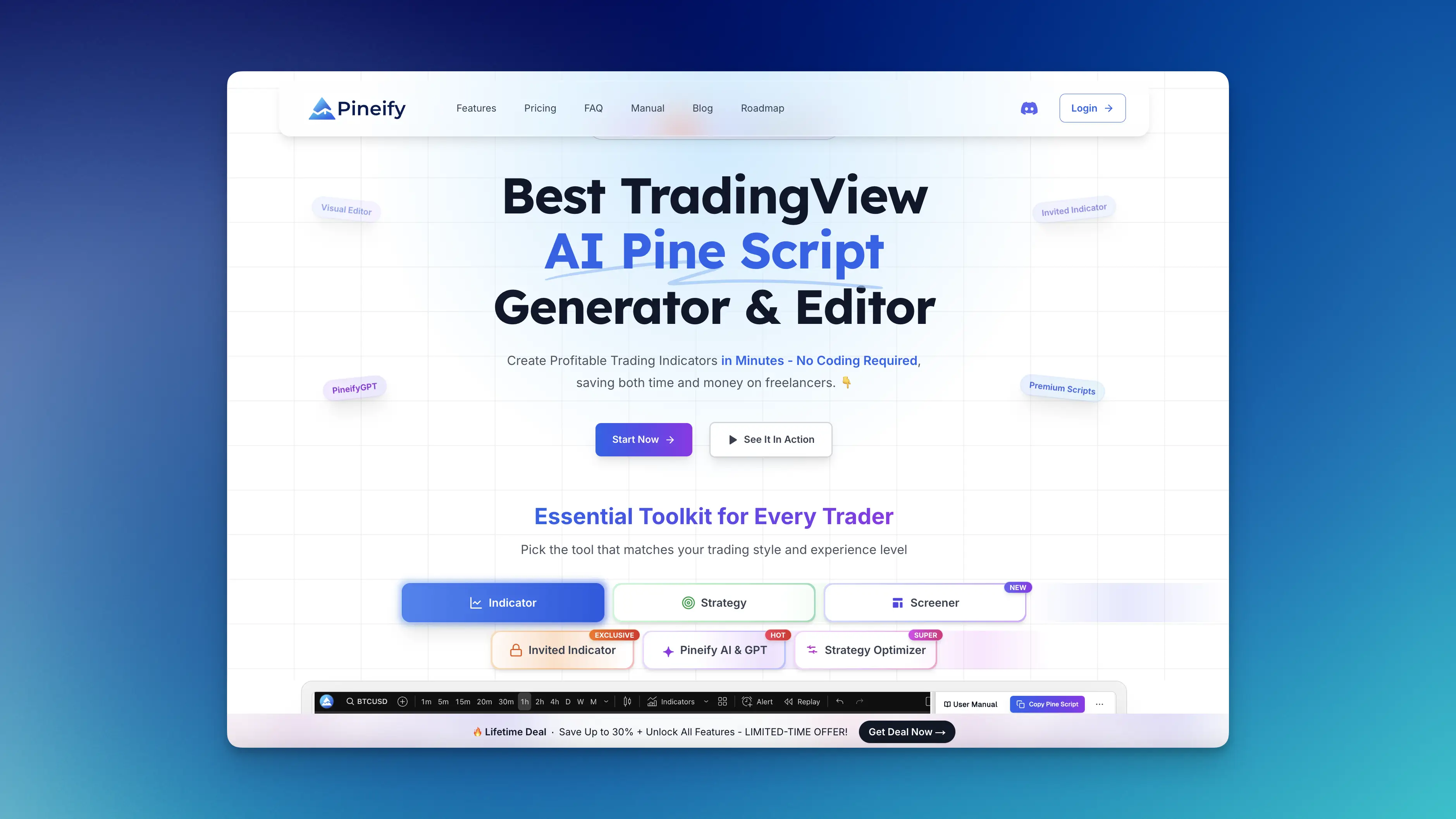
Pineify's Market Insights dashboard pulls dark pool blocks, options flow, and congressional trading into one interface. I use it to spot massive hidden trades without the typical complexity.
-
Look for the unusual, skip the noise. Focus on single trades above $50 million in companies you already know. Watch what the price does in the 1 to 3 days after the hidden trade hits.
-
Never use the signal alone. A big dark pool buy is most meaningful when the stock sits at a support level or breaks out of a pattern. The combination is stronger than either piece.
-
Watch regulation changes. The SEC and FINRA update transparency rules regularly. Following these helps you understand when your tools might evolve.
-
Test before you commit. Use historical data to check: when similar dark pool activity appeared in the past, did the stock move the way you expected? Our Backtesting.py Guide: How to Backtest Trading Strategies in Python provides a solid starting point for Python traders.
The point isn't a magic signal. It's adding one more layer of context. When you see part of the hidden activity that moves markets, you're making more informed choices.
Frequently Asked Questions
What are dark pools and how do they work?
Dark pools are private trading venues where large investors buy and sell stocks off public exchanges. Orders stay hidden until after execution, giving institutions anonymity. I'd add that they're regulated by the SEC under Reg ATS and have to follow fair pricing rules the same way public exchanges do.
How does AI improve dark pool trading?
AI powers smarter order matching algorithms — TWAP, VWAP, Implementation Shortfall. Machine learning models analyze news sentiment, social media, and order book patterns to predict short-term price swings and detect hidden institutional activity. It's not perfect, but it's faster and more thorough than manual scanning.
Can retail traders use dark pool data?
Yes, through AI analytics platforms that scan dark pool data for signals. You can't place orders directly in a dark pool, but tools like Pineify Market Insights aggregate off-exchange data, flag unusual trades, and help you make more informed decisions on public exchanges. I prefer sticking with platforms that explain their logic, not just flash alerts.
What are the main risks of dark pool trading?
Less accurate public prices, an information gap between institutions and retail, wider bid-ask spreads, broker conflicts of interest, and manipulation like spoofing. A 2026 study linked dark pool growth to a greater chance of sudden stock crashes. I think the information gap is the one that bothers me most — it's hard to compete when you can't see the same data.
What is the difference between TWAP and VWAP?
TWAP slices large orders into equal pieces over a set period to minimize market impact. VWAP follows the market's natural rhythm — trading more during high-volume periods, fewer during quiet times — aiming to match the day's average. I'd say TWAP is for stealth, VWAP is for efficiency.