Pineify's Moving Average Channel plots two separate simple moving averages. By default, the upper line averages highs and the lower line averages lows, both over 20 bars. It is not an ATR envelope around a centerline, and its current component does not provide eight selectable moving-average types.
MT4 optimization compares an Expert Advisor under different input settings on the same historical data. The highest-ranked pass is a selected result, not an independent estimate of future performance. A useful workflow preserves a baseline, documents every search and evaluates the chosen rules on data that did not influence their selection.
An MT4 backtesting report summarizes one Expert Advisor test under a particular historical model and set of inputs. Read it as a description of that experiment. Before comparing profit factors or drawdowns, confirm that the reports use comparable data, costs, position sizing and test periods.
Manual backtesting in MT5 can mean two different activities: stepping through an ordinary historical chart and recording hypothetical trades, or using a simulator EA inside Strategy Tester visualization. The first is chart inspection; the second can simulate orders and produce a transaction record. Neither automatically reproduces live execution or removes hindsight bias.
Choose the method according to the question. Chart stepping can help make discretionary rules explicit. A simulator is more suitable when you need a consistent record of order placement and exits.
Mua gói TradingView trên tài khoản do bạn kiểm soát khác với mua thông tin đăng nhập từ người bán. Trước khi thanh toán, hãy xác định tính năng cần dùng, tổng chi phí, điều kiện gia hạn và ai có quyền khôi phục tài khoản. Giá thấp không tự chứng minh người bán được TradingView ủy quyền.
Bài viết này so sánh cách chọn gói và kiểm tra giao dịch mua; không xác nhận độ tin cậy của một dịch vụ bán tài khoản bên ngoài.
The Negative Volume Index (NVI) updates its cumulative price series only when the current bar's volume is lower than the preceding bar's volume. It measures a selected subset of price changes; it does not identify institutional traders or establish that they caused a move.
The “smart money” interpretation is a hypothesis behind the indicator, not information contained in its price and volume inputs. This distinction matters when using NVI for trend filters or divergence research.
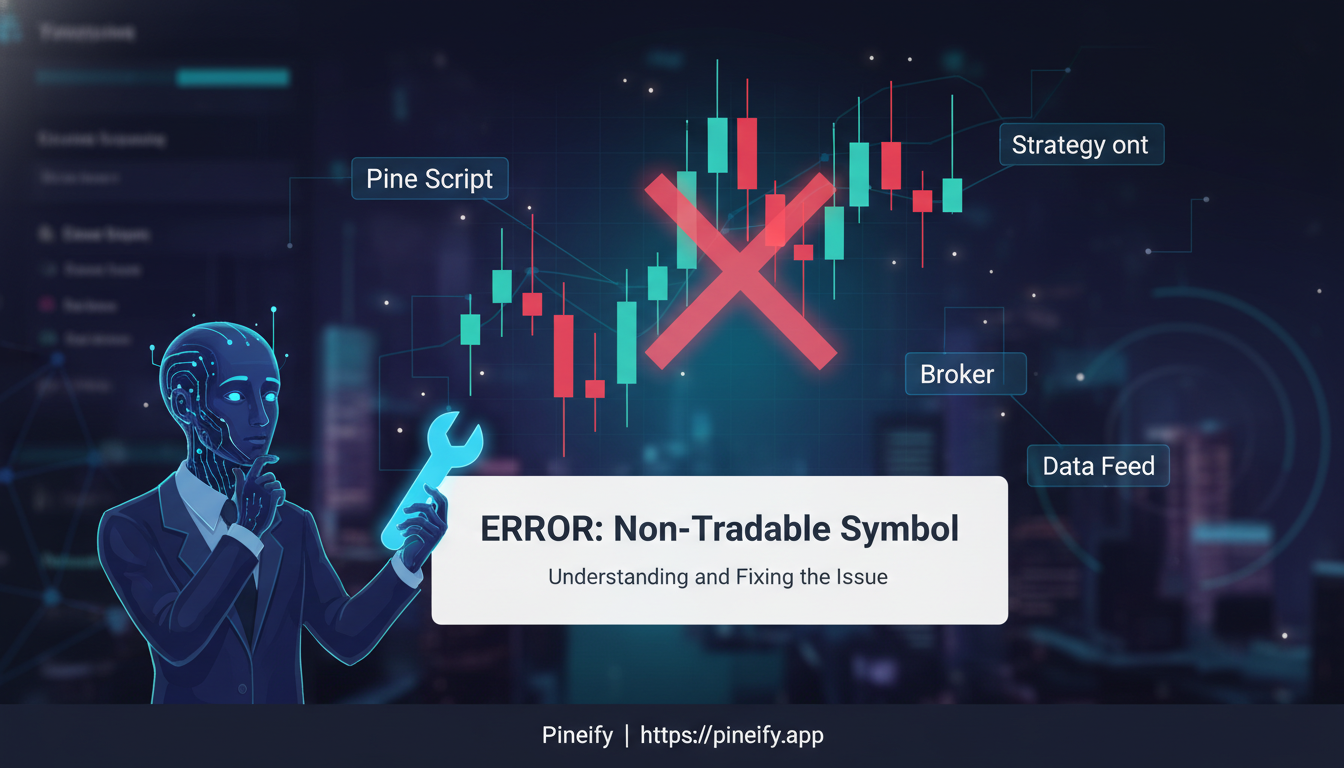
A “non-tradable symbol” message means the selected symbol cannot be traded through the currently selected connection or trading mode. Chart availability, broker support, account permissions, and market-data entitlements are separate checks. Identify which one fails before buying data or changing symbols.
Pineify's Normalized Smoothed MACD (NSM) rescales a fast-minus-slow moving-average difference within a rolling window, smooths that result, and adds a signal line. The scale describes position within recent MACD extremes; zero does not retain the ordinary MACD meaning of equal fast and slow averages. Smoothing changes timing but does not establish fewer losing signals.
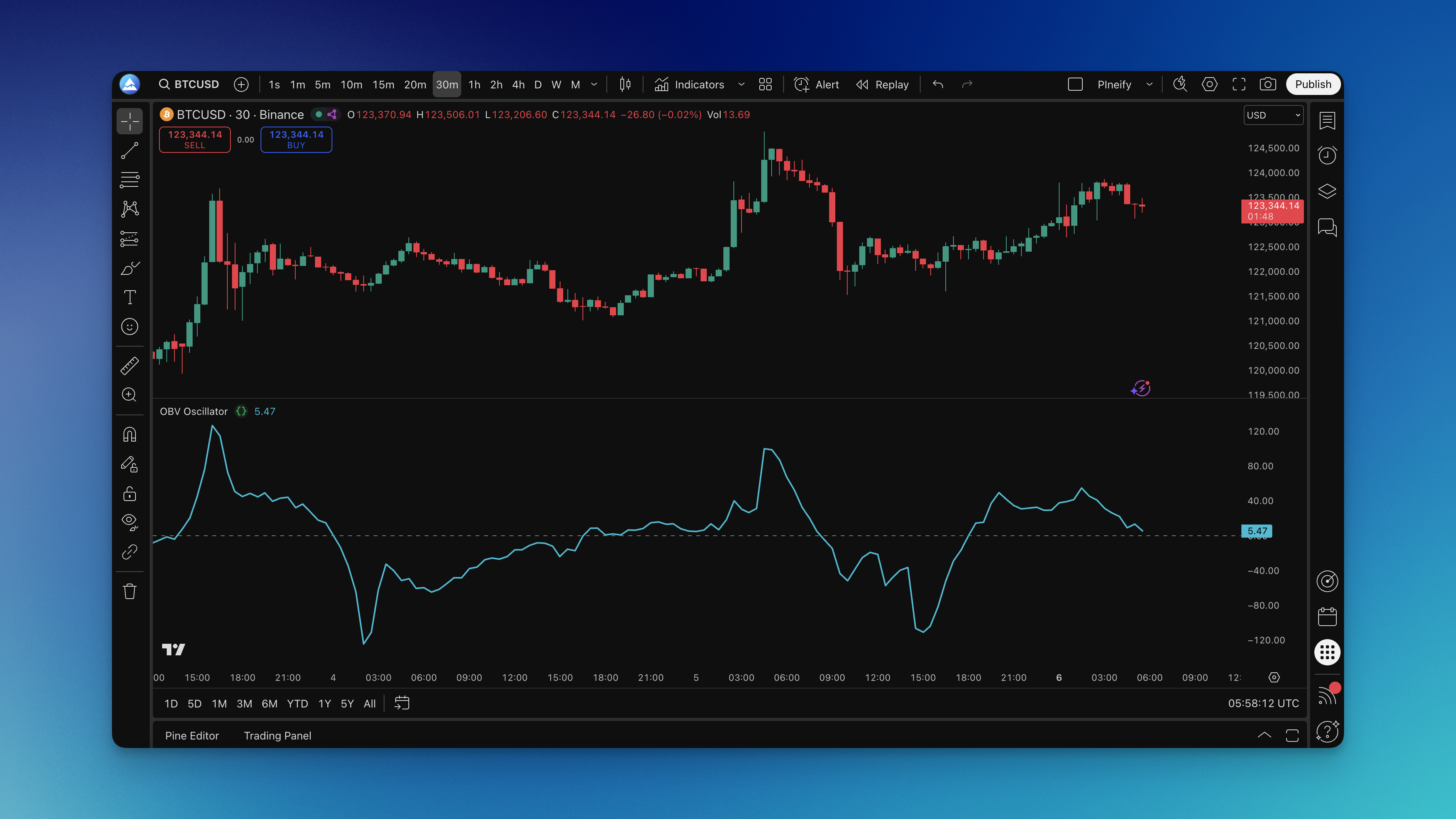
An OBV oscillator compares a signed-volume series with a moving average. It does not identify institutions or show who bought and sold. Pineify's current component also differs from the common cumulative-OBV-minus-EMA definition: it uses a rolling sum of signed volume before subtracting its EMA. That distinction changes the signals and must be understood before comparing charts.
On-Balance Volume (OBV) adds a bar's volume when its close rises and subtracts volume when its close falls. It summarizes signed volume; it does not measure net money entering a market, identify institutions, or establish that a breakout will succeed. An “OBV oscillator” may transform that cumulative series, so check the exact formula before interpreting its zero line.