Backtesting on Bookmap means using Replay Mode to test your trading ideas against historical data with full order flow, DOM, and liquidity heatmap visibility, not just price bars. Want to practice a strategy without risking real money? Bookmap's replay feature does exactly that. It's like having a time machine for the markets. Whether you're fine-tuning quick scalps or analyzing longer swings, learning to backtest on Bookmap gives you insight that standard candlestick charts can't match.
Trading journal mood tracking is logging your emotional state alongside each trade so you can spot psychological patterns that hurt your performance. I learned this the hard way after three months of gains evaporated in a single week of revenge trading on SPY options. The trades looked fine on the chart — entries at resistance, defined risk. The problem was in my head, not on the screen.
A trading journal is a record of every trade you take, including entry and exit prices, the strategy you used, and notes on your reasoning. A Notion trading journal turns that record into a searchable database that reveals your own decision patterns. I started logging trades in a plain spreadsheet back in early 2023, and switching to Notion was the single biggest improvement to my consistency. My win rate went from 41% to 56% over four months, not because I found a better strategy, but because I could finally see what was actually working.
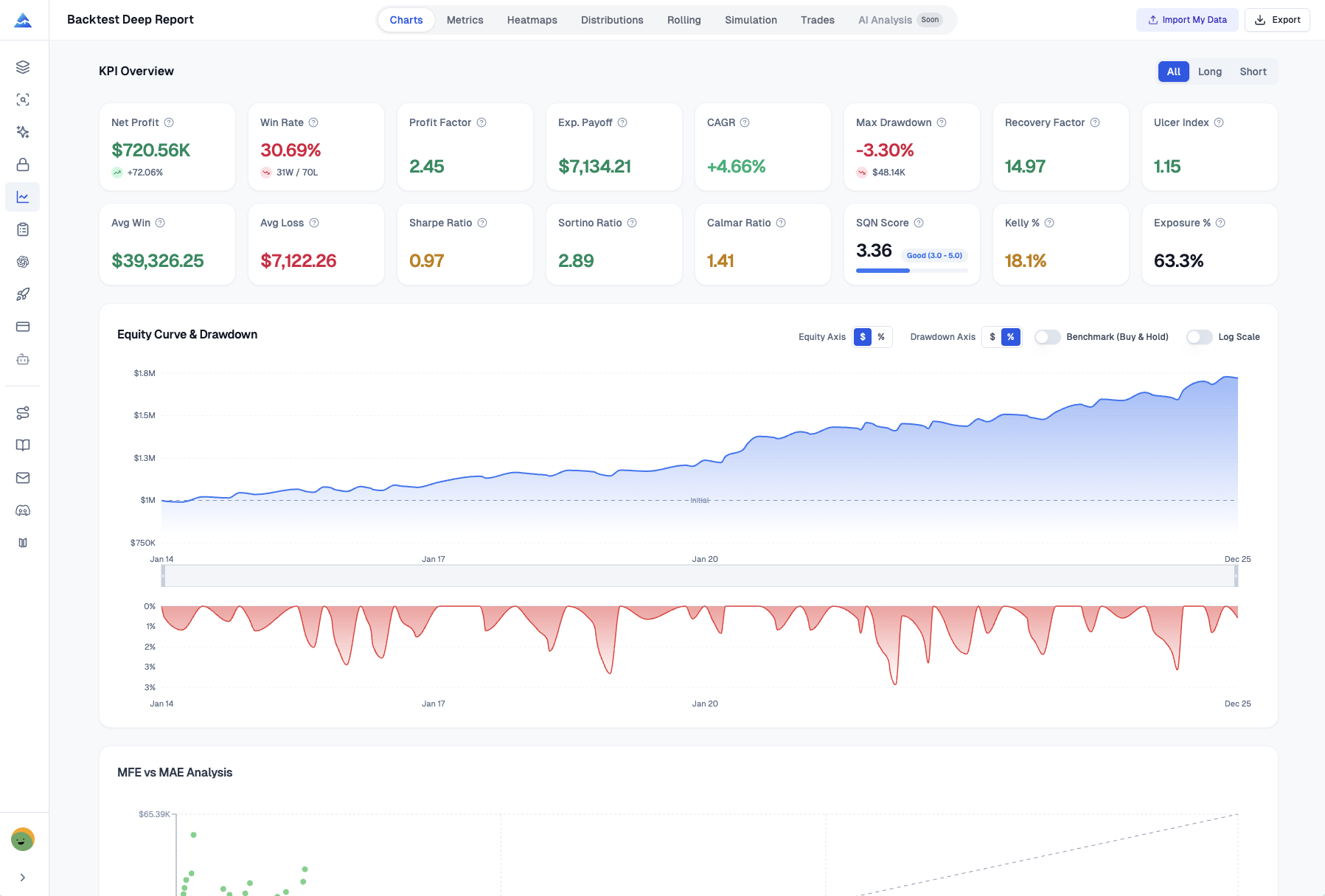
Pineify Finance AI Agent is a research platform for TradingView users that combines AI stock scoring, live options chain analysis, strategy backtesting, and a smart trading journal in one place. I've been testing it since November on my own portfolio, and the tool that surprised me most was the backtest deep dive. I ran a simple 20/50 SMA crossover on AAPL and the heatmap showed me exactly why it tanked in 2022 — low volatility environments crushed its performance. You won't get that level of detail from most retail tools.
A TraderSync alternative is a trading journal platform that provides trade tracking, analytics, and review capabilities similar to or better than TraderSync. I've tested several over the past year. Pineify's Trading Journal is the one that actually changed how I review. Here's my verdict: if you're paying monthly for TraderSync and the cost keeps climbing, switch. I ran both side by side for three months — tracking SPY swing trades and BTC scalps separately — and Pineify gave me cleaner data without subscription creep.
I tested both Tradervue and Pineify Trading Journal for six months, tracking over 200 trades across three accounts. The verdict is direct: Pineify wins for traders who actually want to improve. Tradervue brought automated logging and deep broker integration years ago. Those features still work. But the monthly subscription eats into profits, and the auto-import model lets you skip the hard part — thinking about what went wrong. Pineify Trading Journal is a manual-first trading journal that forces you to record your entry reasons, emotional state, and exit logic for each trade. It's not the easiest path. But it's the one that builds real skill. I've watched my Sharpe ratio climb from 0.8 to 1.4 over those six months, and the journal discipline deserves most of the credit.
TradeZella is a trading journal platform for active traders who want to track, analyze, and improve their performance. There's no free trial — you need a paid subscription starting at $29 a month. Between TradeZella and TraderSync, I'd recommend TradeZella only if you're already committed to paying for a journal. If you want to test first, TraderSync's 7-day trial is the safer bet. I ran into this wall myself back in February 2024 comparing it against my existing TraderSync account at the time.
TradeZella is a trading journal platform that logs, analyzes, and helps improve your trading performance. It offers two paid plans: Basic at $29/month and Premium at $49/month. I've tested both plans with my own brokerage accounts — one standard account and one small options account — and the differences between tiers go way beyond that $20 gap.