TradingView Trade Copier: Automated Multi-Account Trading Guide (2025–2026)

· 12 min read
Pineify Team
Pine Script and AI trading workflow research team

Whether you're juggling multiple prop firm accounts, growing a strategy that's already working, or just tired of clicking the same trade over and over on different platforms, a TradingView trade copier might be the handiest tool you add to your trading setup. This guide walks you through what a TradingView trade copier actually is, how it works behind the scenes, the best options out there for 2025–2026, and what pitfalls to keep in mind before you jump in.


TradingView Trade Copier: Automated Multi-Account Trading Guide (2025–2026)

What Is a TradingView Trade Copier?

A TradingView trade copier is a piece of software or a cloud service that automatically copies trades from TradingView to one or more broker accounts — usually in real time. When your TradingView alert or strategy triggers, the copier picks up that signal and immediately places the corresponding order on your connected accounts, whether they run on MetaTrader 4 (MT4), MetaTrader 5 (MT5), cTrader, Tradovate, NinjaTrader, or other supported platforms.

This fills a big gap: TradingView is fantastic for charting and building strategies, but it doesn't natively execute live trades through every broker. A trade copier acts as that missing execution layer, turning your TradingView signals into real market orders smoothly.


How Does a TradingView Trade Copier Work?

The magic behind a TradingView trade copier is actually pretty simple — it all comes down to webhooks. If you're not familiar with the term, think of a webhook as a way for one service to send a quick, automated message to another the moment something happens. In this case, TradingView sends a message to your copier whenever your strategy triggers an alert.

Let me walk you through the four steps that make it all happen.

Step 1: Set Up a TradingView Alert

First, you need a strategy or indicator on TradingView — either one you built yourself or something you found. Once you have that, create an alert based on it. In the alert settings, you'll see a field called Webhook URL. That's where you'll paste a special link from your copier service later.

A quick heads-up: you'll need a paid TradingView plan (Essential or higher) to use webhooks. Free accounts don't have this option.

Step 2: Configure the Webhook Message

Now, in that same alert, you'll write a short JSON command — basically a list of instructions telling the copier exactly what to do. Here's what a typical one looks like:

{
"action": "buy",
"symbol": "EURUSD",
"risk": 1,
"sl": 50,
"tp": 150
}

This message says: "Buy EURUSD, risk 1% of the account, set a stop loss 50 pips away, and take profit at 150 pips." You can customize these fields however you like depending on your strategy.

Back in your trade copier dashboard, you'll tell it which account is the master (the one getting signals from TradingView) and which accounts are the followers (the broker accounts that will copy the trades). You can also set a lot-size ratio. For example, if the master trades 1 lot, you might tell a follower to take only 0.5 lots. This lets you manage risk differently across accounts.

Step 4: Let Automation Take Over

Once everything is set up, it's hands-off. When your TradingView alert fires, it sends a signal to your copier's server through the webhook. The copier processes that signal and places the trade on all your linked accounts — usually in 50 to 100 milliseconds. That's faster than you can blink, and it means your trades execute almost instantly after the alert triggers.

Best TradingView Trade Copier Tools in 2025–2026

The market has matured significantly, and several platforms stand out for reliability, speed, and features. If you're still searching for the right strategy to run with your copier, check out our Best Strategy on TradingView guide for proven approaches.

ToolTypeLatencyPricingBest For
TradeSyncerCloud<100ms$49–$89/moMulti-prop-firm traders
DuplikiumCloud1–3msSubscriptionMT4/MT5/cTrader power users
PickMyTradeCloud<50msSubscriptionTradovate & futures traders
CopygramCloud~1s$12.50–$79/moDXtrade & MT4/MT5
TradingView Copier ProLocalMillisecondsOne-time feePrivacy & prop firm traders
Affordable IndicatorsLocalFast$175 one-timeBudget-conscious traders

TradeSyncer

TradeSyncer is a cloud-based copier that runs trades in under 100ms and claims a 99.9% uptime across more than 17,500 users worldwide. It works with TradingView, NinjaTrader, Tradovate, Rithmic, and ProjectX. You can set daily loss limits and session-time locks, which makes it a solid choice if you're managing multiple prop firm accounts and need to keep risk in check.

Duplikium

Duplikium runs cloud servers in London, New York, and Singapore to keep internal latency as low as 1–3ms. It supports a wide range of platforms — MT4, MT5, cTrader, DXtrade, FXCM, LMAX, Tradovate, and NinjaTrader — and doesn't require you to install anything locally. A multi-master feature lets you combine signals from several TradingView accounts into a single follower account, which can simplify things if you follow multiple strategies.

PickMyTrade

PickMyTrade specializes in linking TradingView alerts to Tradovate and other futures platforms. It automatically applies stop-loss and take-profit brackets, and supports multi-level take profit, trailing stops, and OCO orders. You don't need any coding or API setup to get it working.

Copygram

Copygram focuses on converting TradingView alerts into orders on DXtrade and Tradovate instantly. Its webhook setup is straightforward, and the built-in AI-enhanced risk management helps beginners keep things under control without overcomplicating the process.

TradingView Copier Pro (Local)

If you're concerned about privacy or need to follow prop firm group-trading rules, a local copier like TradingView Copier Pro might be a better fit. You pay a one-time fee, and all data stays on your own machine — no third-party server ever sees your trades, entries, or account balances.

Key Benefits of Using a TradingView Trade Copier

  • Scalability: You can run one main trading account and have your trades automatically copied to dozens of funded or live accounts. No need to place the same trade over and over again — it all happens in the background.
  • Consistency: Every trade, from entry to exit to any adjustments, gets mirrored quickly and accurately. That means no more second-guessing or making mistakes under pressure. Your strategy stays clean and repeatable.
  • Time freedom: Trades keep running 24 hours a day, 5 days a week (or even 7 days a week with crypto), whether you're sleeping, working, or on vacation. You don’t have to be glued to the screen.
  • Risk control: Good copiers let you set limits per account — like how big each trade should be, a maximum daily loss, how many trades can be open at once, or even time-based rules to stop trading after a certain hour. It keeps your risk in check without babysitting.
  • Symbol mapping: Different platforms use different names for the same asset (for example, TradingView calls it “US500” but your broker might call it “SP500S”). A copier handles these differences automatically through built-in mapping tables, so you don’t have to worry about mismatches.

Risks and Limitations to Know

Understanding the downsides is just as important as the benefits.

Reliability Concerns

Cloud copiers depend entirely on their servers. If you hang out on trading forums, you'll see complaints about bugs, lag, and missed trades when the server goes down. If your cloud copier crashes while you have an open position, that close signal might never reach your broker.

What you can do: Look for services that publish uptime SLAs, or skip the cloud altogether and use a local copier that runs on your own computer or a VPS.

Hidden Monthly Costs

Most cloud copiers charge $25 to $99 every month. Over two years that adds up to $600–$2,400—often more than a new trader makes in that time. One-time purchase tools like TradingView Copier Pro or Affordable Indicators can save you a lot in the long run.

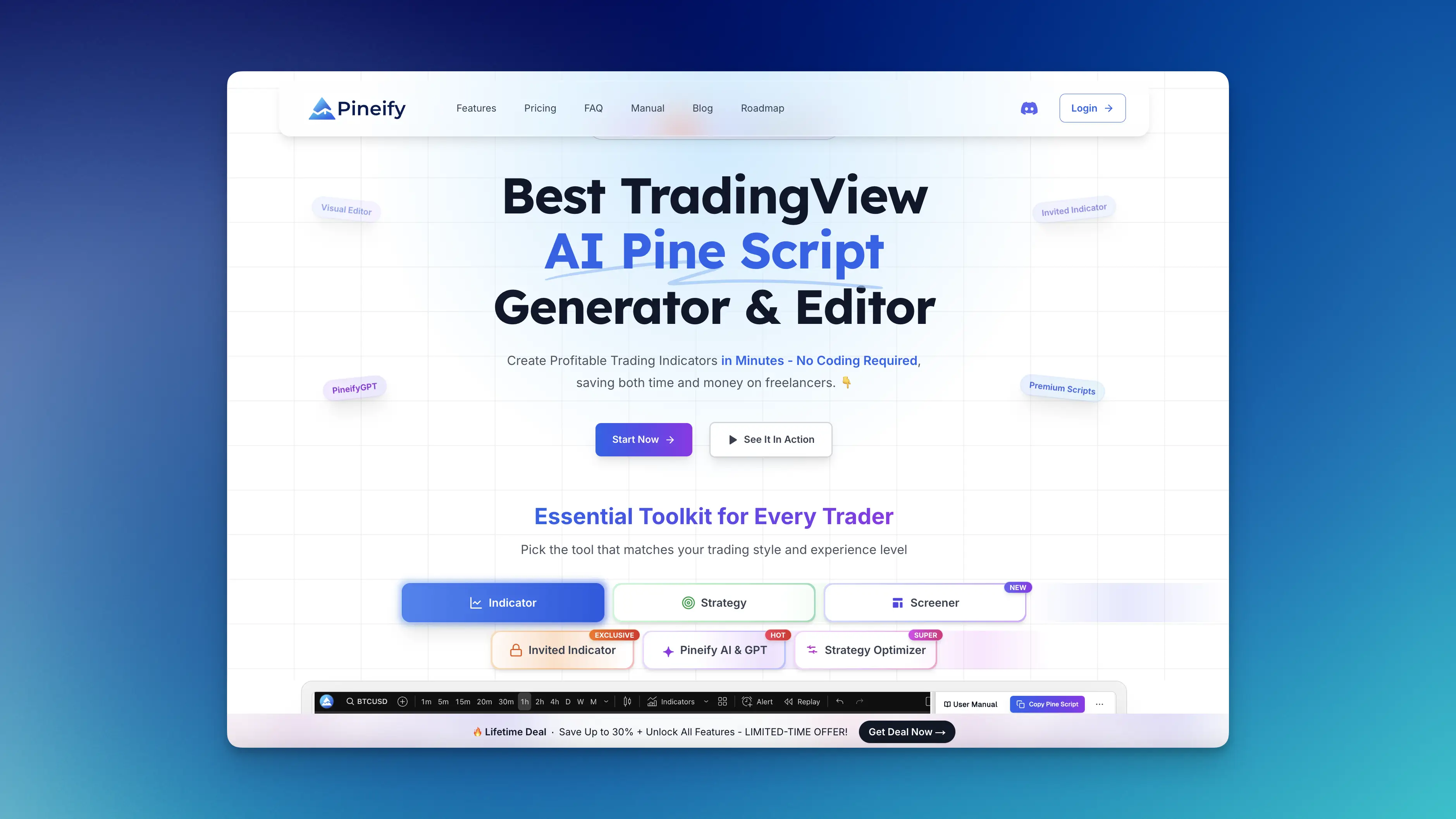
Speaking of smarter spending, Pineify gives you a complete 10-in-1 AI trading workspace with a one-time payment — no monthly subscriptions, ever. From Pine Script generation to stock screening and market insights, it's trusted by over 100,000 traders worldwide. And because it runs locally on your browser, you never have to worry about server downtime or missed signals.

Pineify Website

Prop Firm Group Trading Risk

This is the biggest trap for prop firm traders. When several people use the same cloud copier server, the prop firm can spot identical trades and flag it as "group trading," which usually means your account gets terminated. Experienced traders on Reddit warn: "Use a local copier, because for online copiers they will blame you: 'You are group trading.'" Always read your prop firm's rules before using a shared cloud service.

Data Privacy

Cloud copiers can see your entire trading activity—every entry, exit, lot size, broker name, and account balance. If keeping that private matters to you, a local copier is the only way to stay completely out of sight.

Strategy Quality Still Matters

A trade copier doesn't fix a bad strategy; it just automates it. If your TradingView strategy loses money over time, the copier will faithfully lose money across every connected account. Test your strategy thoroughly with advanced backtesting and at least 1–3 months of paper trading before you go live.

Cloud vs. Local Trade Copiers: Which One Should You Pick?

FactorCloud CopierLocal Copier
Setup difficultyEasy, no installModerate (EA/VPS setup)
Uptime dependencyProvider's serversYour machine/VPS
Data privacyShared with providerFully private
Prop firm safetyRisk of group trading flagsSafer for prop accounts
Cost modelMonthly subscriptionOne-time purchase
Remote accessYes, from any deviceRequires VPS for remote

If you're juggling several prop firm accounts at once, a local copier running on a dedicated VPS is usually the safest and most affordable option in the long run. But if you're a casual trader just scaling one live strategy, going with a reputable cloud service gives you the simplest setup without headaches.

Q&A: TradingView Trade Copier

Q: Do I need a paid TradingView plan to use a trade copier?
Yes. TradingView’s webhook feature — that's how all modern trade copiers get signals — requires at least the Essential paid plan. Free accounts just can't send webhook alerts.

Q: Can I copy trades from TradingView to MT4 or MT5?
Totally. Most copiers out there (like Duplikium, TradeSyncer, or TradingView Copier Pro) support MT4 and MT5 as follower accounts, so it's one of the most common setups.

Q: How fast does a copier execute trades?
The best cloud services get under 100 milliseconds (TradeSyncer does this) and even 1–3 milliseconds internally (Duplikium). Local copiers that run an Expert Advisor on MT4 or MT5 can execute in milliseconds once the webhook signal arrives.

Q: Is copy trading safe for prop firm accounts?
It depends on the type of copier. Cloud copiers with shared servers can look like group trading to many prop firms — which they often ban. Local copiers are much safer. Always check your prop firm's rules.

Q: Can one TradingView alert trigger trades on multiple broker accounts?
Yes — that's exactly why people use these tools. A single TradingView alert fires the webhook, and the copier sends that trade to all linked accounts at once, with separate risk settings for each.

Q: What happens if the copier goes offline while a trade is open?
With cloud copiers, the open trade just sits there until the service comes back and gets a close signal — which could lead to losses you can't control. That's why many serious traders prefer local copiers, or at least keep a close eye on things.

Next Steps: Taking Your Trading Further

A TradingView trade copier is one of the most powerful tools you can add to your trading toolkit. Whether you're scaling funded accounts, automating a strategy that's already working, or just trying to avoid manual slip-ups, here's how to get started the right way.

  1. Test your strategy first — Before you connect anything to real money, backtest your plan inside TradingView. Learn how to set up a proper backtest in our Comprehensive 2025 Backtesting Guide. Then paper-trade for at least a month. If it's not solid on its own, a copier won't fix it.
  2. Decide between cloud or local — Your choice depends on your prop firm's rules, how much privacy you need, and your budget. The comparison table earlier should help you weigh the options.
  3. Start with just one follower account — Don't scale to ten accounts right away. Set up one, confirm that symbol mappings match, risk ratios are correct, and webhooks are firing properly.
  4. Keep an eye on things — Even the best copiers run into weird edge cases now and then. Check your dashboard regularly, especially during big news events or high volatility.
  5. Share your experience — Already used a TradingView trade copier? Drop your story or any setup questions in the comments. Real-world insights help every trader who's trying this for the first time.

The tools to automate and scale your trading are right here. The only real question is whether your strategy is ready yet. For a deeper look at the tools behind your strategies, see our PineCoders vs Pineify comparison to choose the best Pine Script helper.


Sources: QuantVPS – Top Trade Copiers for TradingView | Pineify – Trade Copier for TradingView Ultimate Guide | TradingView Copier Pro – Copy Trading Risks | TradeSyncer – Copy Trading Pros and Cons | Vettedpropfirms – 7 Best Trade Copiers for TradingView | PickMyTrade – Multi-Account Trading Automation