MQL5 runtime error reference

MQL5 Error 5304: Custom symbol with the same name already exists

MQL5 error 5304 officially means "Custom symbol with the same name already exists." CustomSymbolCreate was called with a name already present in the terminal custom-symbol namespace. Check for the symbol first and either reuse it, update it, or choose a deterministic unique name. Delete an existing custom symbol only through an explicit migration or cleanup action. Capture GetLastError immediately around the failing call so an older error is not mistaken for the current failure.

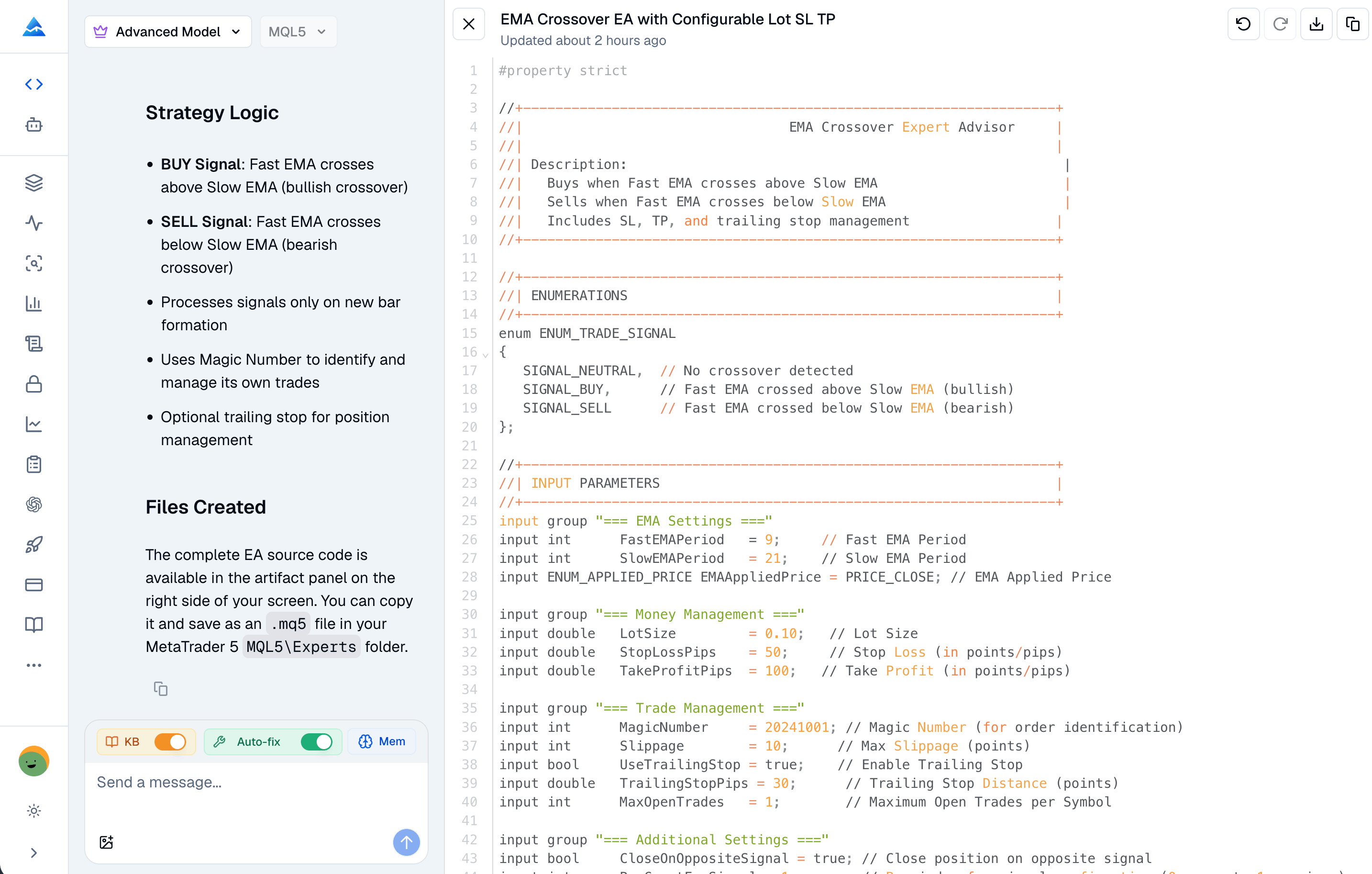
Open the Coding Agent and choose MQL5 from the language menu.

Isolate runtime error 5304.mq5
bool EnsureCustomSymbol(const string name,const string path="Pineify")
  {
   bool is_custom=false;
   if(SymbolExist(name,is_custom))
     {
      PrintFormat("Symbol %s already exists, custom=%s",name,
                  is_custom ? "true" : "false");
      return is_custom;
     }

   ResetLastError();
   if(!CustomSymbolCreate(name,path))
      PrintFormat("CustomSymbolCreate failed, error=%d",GetLastError());
   return SymbolExist(name,is_custom) && is_custom;
  }
  • Official meaning: Custom symbol with the same name already exists
  • Layer: terminal runtime
  • Read with: GetLastError
  • First step: isolate the failing call

Where error 5304 comes from

CustomSymbolCreate was called with a name already present in the terminal custom-symbol namespace. The numeric value is listed in the official runtime error table, which is separate from MetaEditor compilation errors and trade server return codes.

Reset the last-error state before the suspected call, save its direct return value, and read GetLastError immediately afterward. This produces a causal log instead of a stale code.
Checks that narrow the cause

Preserve the exact parameters and terminal context that produced the failure. Check one precondition at a time before adding retries.

  • Use SymbolExist to detect the name and whether it is custom.
  • Separate create from update logic so repeated initialization is idempotent.
  • Include source or version information in a generated symbol name when coexistence is intended.
  • Do not automatically delete an existing symbol that may contain imported history.

Apply the smallest repair

Check for the symbol first and either reuse it, update it, or choose a deterministic unique name. Delete an existing custom symbol only through an explicit migration or cleanup action.

After the repair, test both the expected path and a deliberately invalid input. The second test confirms that the diagnostic branch still exposes failures.

Use a focused diagnostic

The helper is idempotent: it reuses an existing custom symbol and creates only when the name is absent. It does not destroy existing data.

A clean compile or a cleared error code does not prove strategy logic, broker compatibility, backtest quality, or live-trading safety. Reproduce the result in the target MetaTrader 5 terminal and account environment.

Isolate runtime error 5304.mq5
bool EnsureCustomSymbol(const string name,const string path="Pineify")
  {
   bool is_custom=false;
   if(SymbolExist(name,is_custom))
     {
      PrintFormat("Symbol %s already exists, custom=%s",name,
                  is_custom ? "true" : "false");
      return is_custom;
     }

   ResetLastError();
   if(!CustomSymbolCreate(name,path))
      PrintFormat("CustomSymbolCreate failed, error=%d",GetLastError());
   return SymbolExist(name,is_custom) && is_custom;
  }
Where Pineify fits

Repair editable MQL5 source with compiler feedback

Pineify can generate or revise MQL5 source and use MQL5 compilation diagnostics during the coding workflow. Keep the exact error, source location, program type, and intended behavior in the request so the change remains reviewable.

Open MQL5 Coding Agent

Pineify does not run your broker terminal, Strategy Tester, market data, or live orders. Validate the final program in your own MetaTrader 5 environment.

Review MQL5 AI Coding Agent capabilities
Pineify MQL5 AI Coding Agent with an editable MetaTrader 5 code artifact

A practical verification workflow

  1. 1

    Reset the error state

    Call ResetLastError directly before the suspected function so the next code belongs to that operation.

  2. 2

    Record call and inputs

    Save the function return value, every input, and GetLastError. Confirm that the captured runtime code is 5304.

  3. 3

    Validate the preconditions

    Use SymbolExist to detect the name and whether it is custom. Separate create from update logic so repeated initialization is idempotent. Include source or version information in a generated symbol name when coexistence is intended. Do not automatically delete an existing symbol that may contain imported history.

  4. 4

    Retest in the target terminal

    Compile the changed source, repeat the failing operation, and test the surrounding EA or indicator behavior in MetaTrader 5.

Frequently asked questions

What does MQL5 error 5304 mean?

The official runtime error table defines 5304 as "Custom symbol with the same name already exists."

Is error 5304 a compiler error?

No in this context. It is a terminal runtime code. Compiler diagnostics and MqlTradeResult.retcode values use separate code tables.

Why should I call ResetLastError first?

The terminal stores the last runtime error. Resetting it before the suspected call makes the following GetLastError value easier to attribute to that call.

Last verified against the linked official references on . Compile and test the final source in the MetaTrader 5 build, broker, symbol, and account environment you plan to use.

Continue with reviewable MQL5 source

Provide the exact diagnostic and intended behavior, inspect the generated change, compile it, and verify it in your MT5 test environment.

Open MQL5 Coding Agent