

Track recent operating cash generation
Follow net income, non-cash adjustments, working-capital movements, and operating cash flow across rolling periods to investigate recent cash conversion without waiting for year-end.
Pineify Finance Agent organizes trailing-twelve-month cash flows by rolling period, bringing operating, investing, and financing activity together with net income, capital expenditure, free cash flow, cash balances, and filing dates. Use it for a more current view between annual reports, then compare like periods and verify the underlying quarterly filings before drawing a conclusion.
Opens Finance Agent with an Apple trailing-twelve-month cash-flow question ready to send.
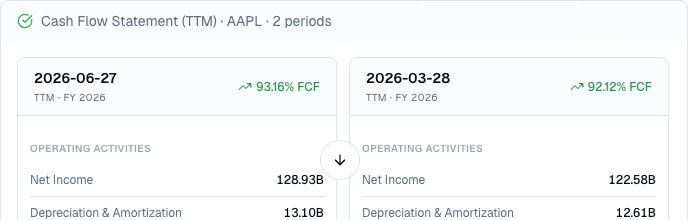
A rolling twelve-month cash view
The tool retrieves provider-calculated trailing-twelve-month records rather than assembling quarters itself. Operating, investing, and financing cash flows cover a rolling span; beginning and ending cash are balances at its boundaries and should not be summed across quarters. Check the provider’s balance treatment against the source statements.
Rolling cash flows describe a reported period, not live cash availability or a substitute for the filed statements. Each update can replace an older quarter, and seasonality, acquisitions, investment sales, debt transactions, buybacks, dividends, foreign-exchange effects, and reporting changes can alter the result. Use the organized card to decide what to investigate next.
Use cases
Follow net income, non-cash adjustments, working-capital movements, and operating cash flow across rolling periods to investigate recent cash conversion without waiting for year-end.
See property and equipment spending, acquisitions, investment purchases and sales, debt activity, dividends, and buybacks alongside the rolling cash totals.
Use free cash flow, capital expenditure, net change in cash, beginning and ending cash, taxes, and interest to frame questions about recent liquidity and capital allocation.
Prompt examples
FAQ
Review the operating, investing, and financing movements, then confirm the period ends, filing dates, reported amounts, source quarters, and company definitions before relying on a trend.
Open Finance AgentFor informational and research use only. No output is investment advice or a guarantee of future performance.