

Trace cash from operations
Follow net income, non-cash adjustments, working-capital changes, and net cash from operating activities to investigate how accounting earnings turned into cash during the period.
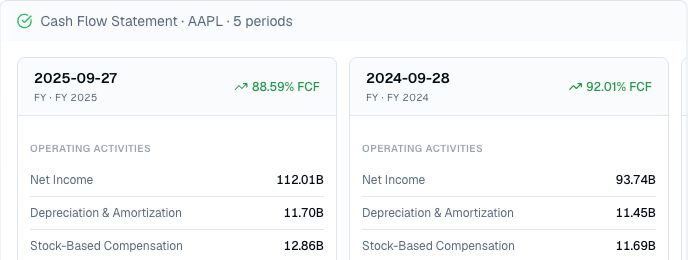
Pineify Finance Agent organizes a public company’s cash flow statement into operating, investing, and financing activities, then keeps working-capital changes, capital expenditure, free cash flow, and cash balances together. Use it to compare reported periods, understand the movement behind the cash balance, and decide which filings or business drivers deserve deeper research.
Opens Finance Agent with an Apple annual cash-flow question ready to send.
A period-by-period cash view
A cash flow statement explains how cash moved during a reported period. By keeping operating cash flow, investing activity, financing activity, net change in cash, beginning and ending cash, and key cash metrics together, Finance Agent makes the movement behind the balance easier to investigate.
Cash flow is a period flow rather than a point-in-time balance. Annual and quarterly periods can have different lengths and seasonal patterns, while working-capital timing, acquisitions, investment sales, debt activity, buybacks, dividends, and foreign-exchange effects can change the story. Use the organized view as a research starting point and confirm material conclusions in the company’s filing and notes.
Use cases
Follow net income, non-cash adjustments, working-capital changes, and net cash from operating activities to investigate how accounting earnings turned into cash during the period.
Review property and equipment spending, acquisitions, investment purchases and sales, and net investing cash flow to frame questions about reinvestment and capital allocation.
Compare debt issuance, share repurchases, dividends, financing cash flow, free cash flow, and beginning-to-ending cash to understand how the company funded operations and returned capital.
Prompt examples
FAQ
Compare the periods, then verify the filing, working-capital timing, maintenance versus growth spending, debt terms, capital returns, and one-time transactions before drawing a conclusion.
Open Finance AgentFor informational and research use only. No output is investment advice or a guarantee of future performance.