

Review liquidity and working capital
Compare cash, short-term investments, receivables, inventory, current assets, and current liabilities to see which near-term funding questions deserve attention.
Pineify Finance Agent organizes a public company’s balance sheet into a clear view of assets, liabilities, shareholder equity, cash, investments, debt, and liquidity. Use it to compare financial position across reported dates, see how the capital structure is changing, and identify the filing details or business drivers that deserve deeper research.
Opens Finance Agent with an Apple annual balance-sheet question ready to send.
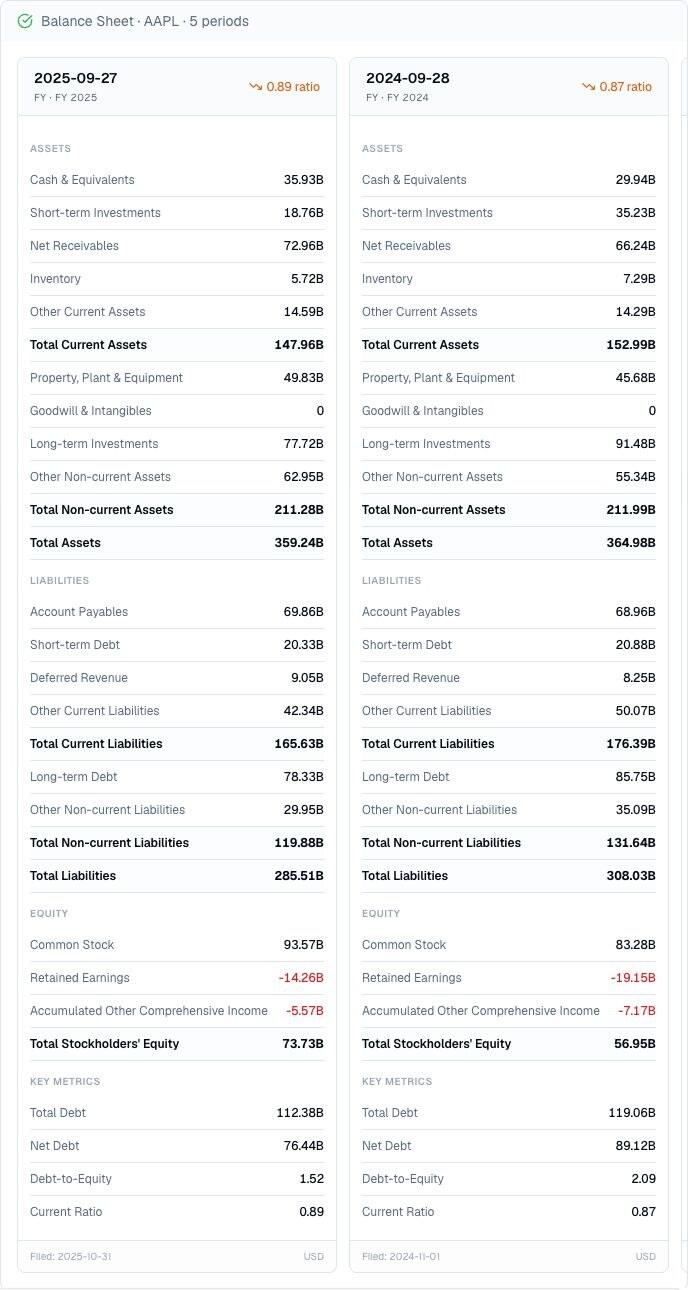
A financial-position snapshot
A balance sheet shows a company’s financial position at a specific date. Keeping cash, receivables, inventory, investments, property, debt, other obligations, and shareholder equity together makes it easier to see how the business is funded and where financial flexibility may be changing.
The displayed current ratio and debt-to-equity ratio are useful prompts for further research, not universal health scores. Industry economics, negative or reduced book equity, seasonal working capital, restricted assets, debt maturities, and off-balance-sheet commitments can materially change the interpretation.
Use cases
Compare cash, short-term investments, receivables, inventory, current assets, and current liabilities to see which near-term funding questions deserve attention.
Follow short-term debt, long-term debt, total debt, net debt, total liabilities, and shareholder equity across reported dates.
See whether financial assets, property and equipment, intangibles, receivables, inventory, or other assets are becoming more important to the company’s balance sheet.
Prompt examples
FAQ
Compare the reported dates, then confirm classifications, debt terms, liquidity sources, restricted cash, leases, commitments, contingencies, and subsequent events in the company’s filings.
Open Finance AgentFor informational and research use only. No output is investment advice or a guarantee of future performance.