Building Smart Trading Conditions Without Code: Your Complete Guide to Pine Script Condition Editing
Ever stared at a blank Pine Script editor wondering how to turn your trading ideas into actual code? Yeah, I've been there too. That's exactly why tools like Pineify exist – to bridge that gap between having a brilliant trading strategy in your head and actually implementing it on TradingView.
Let me walk you through one of the coolest features in modern trading: visual condition editors that let you build complex Pine Script logic without writing a single line of code.
What Makes a Good Condition Editor?
Think of a condition editor as your trading strategy translator. You know that feeling when you can clearly see a setup forming on your charts – maybe the MACD is crossing above the signal line, RSI is below 30, and price is above the 20-period moving average – but translating that into Pine Script feels like learning a foreign language?
That's where Pineify's condition editor comes in. It's designed to be intuitive enough for beginners while powerful enough for experienced traders who want to test complex strategies quickly.
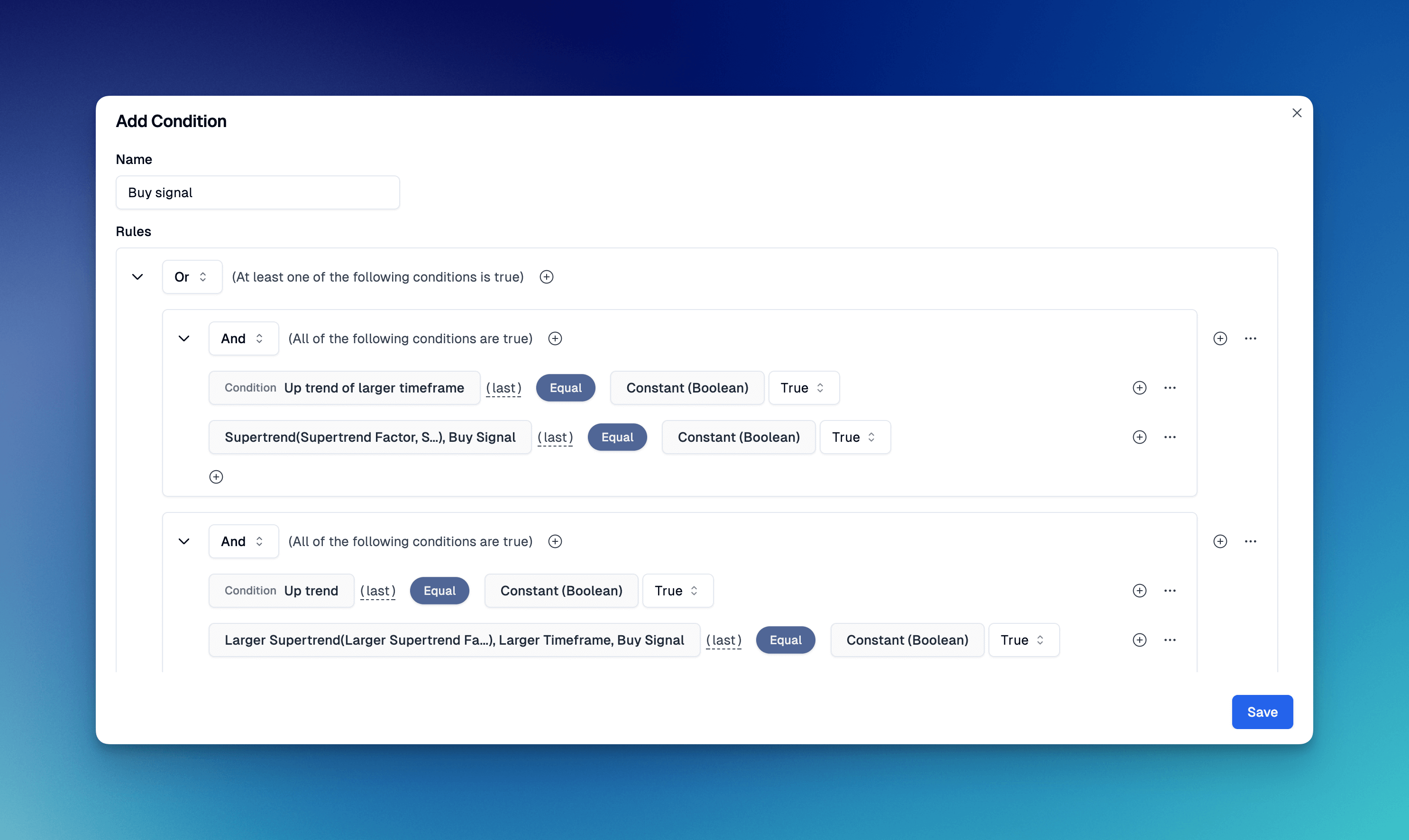
The beauty of a visual approach is that you can experiment with different combinations of indicators and conditions in real-time. No more syntax errors, no more debugging sessions that eat up your entire evening. Just pure strategy development.
Combining Multiple Conditions Like a Pro
Here's where things get really interesting. Most profitable trading strategies don't rely on just one indicator – they use multiple confirmation signals. In traditional Pine Script, you'd write something like:
buySignal = (macd > signal) and (rsi < 30) and (close > sma(close, 20))
But with a visual condition editor, you're essentially building the same logic through an intuitive interface. You can drag and drop different conditions, connect them with AND/OR operators, and see exactly how they interact.
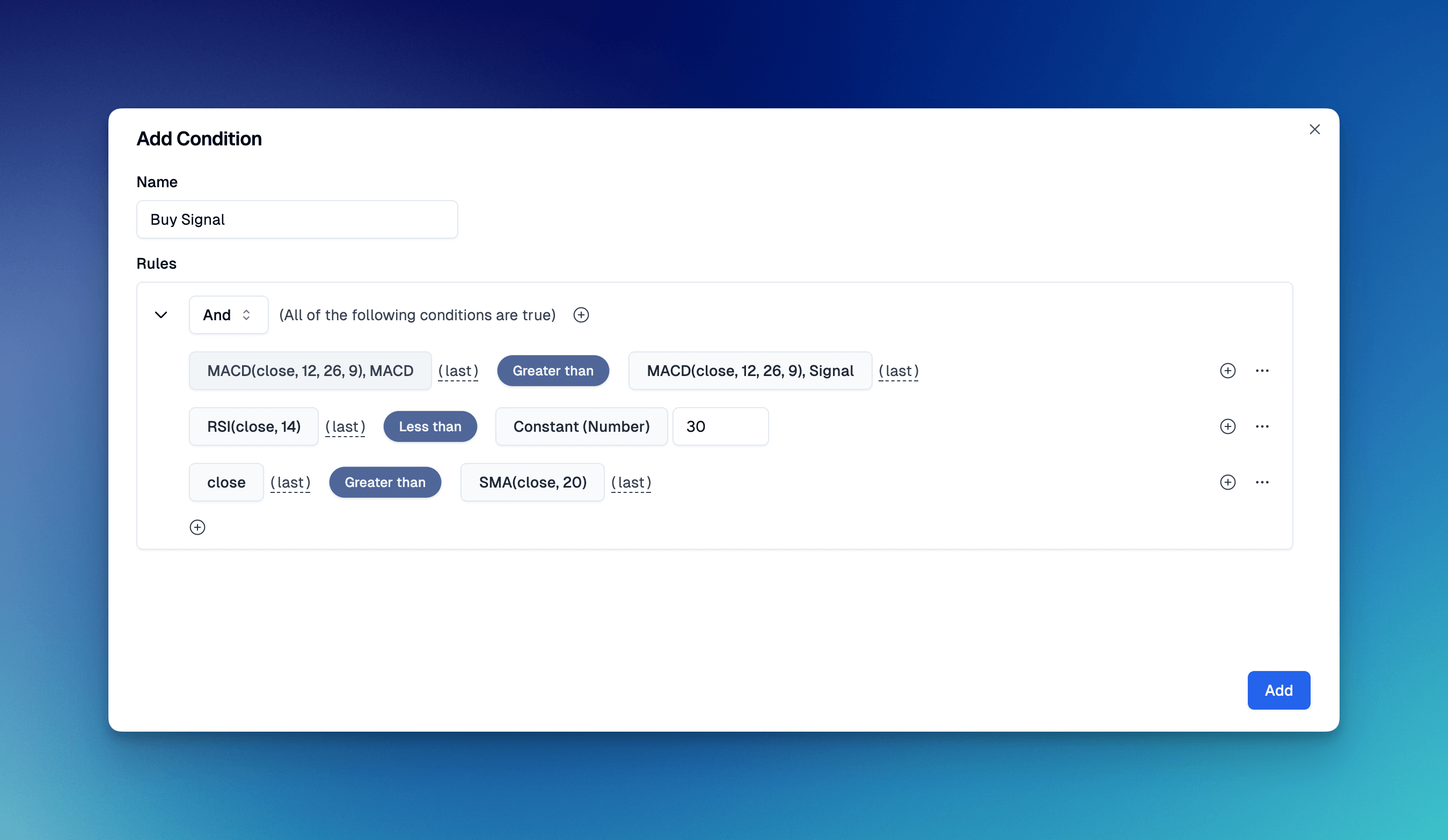
What I love about this approach is how it forces you to think clearly about your strategy logic. When you're visually connecting different conditions, you naturally start asking yourself: "Do I really need all these conditions? Are some of them redundant?"
This is actually similar to how professional traders approach Pine Script multiple conditions – they start with a clear logical framework before diving into the code.
Making Your Conditions Visual with Conditional Plots
Now, here's where the magic really happens. Once you've built your conditions, you want to see them in action on your charts. Conditional plots are your best friend here.
Instead of just having abstract buy/sell signals floating around, you can create visual markers that appear exactly when your conditions are met. Think of it as adding smart annotations to your charts that only show up when something important is happening.
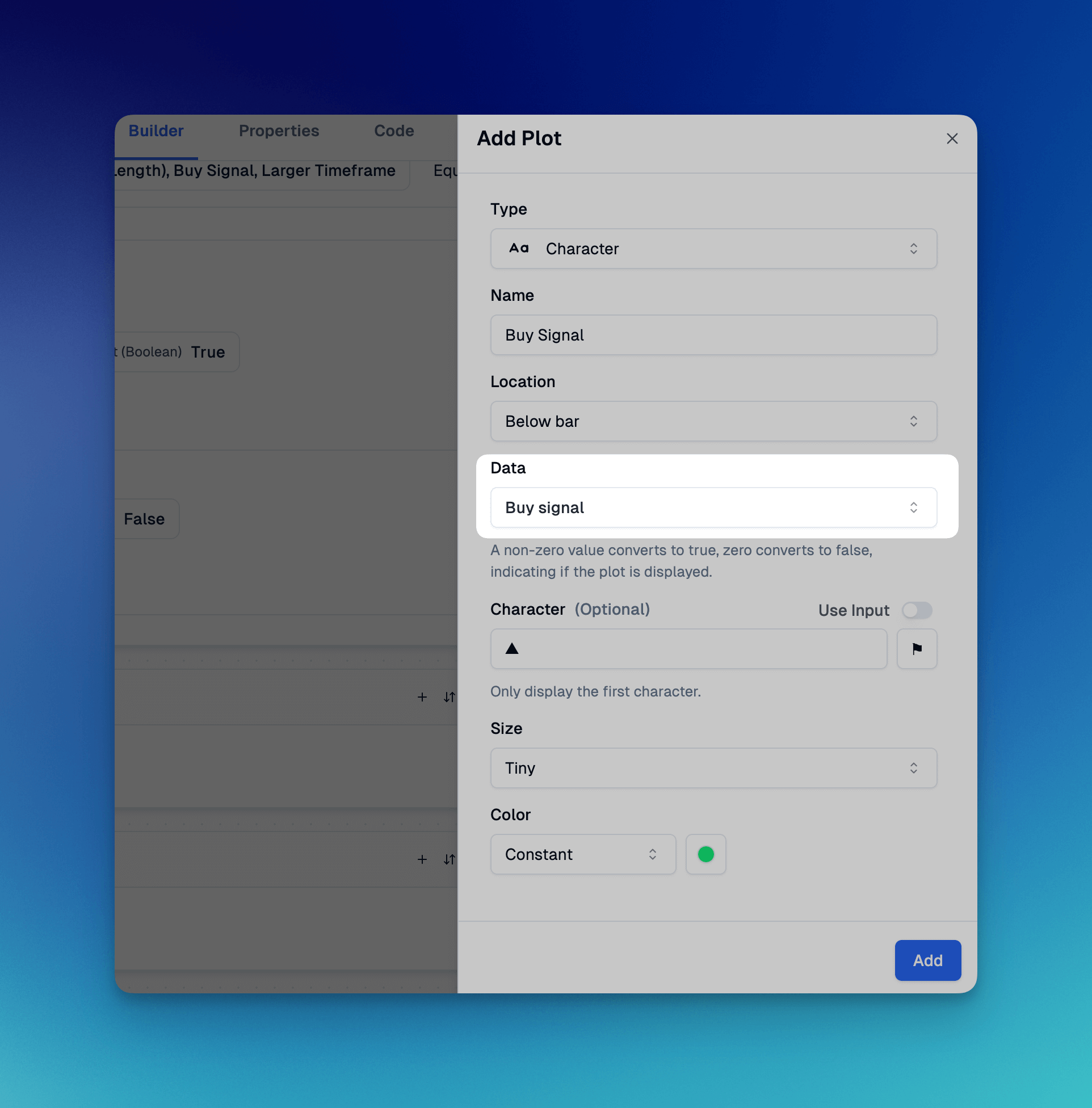
The process is straightforward: create your condition, choose how you want it displayed (arrows, shapes, colored bars), and boom – your chart becomes a visual representation of your trading logic.
When you copy the generated Pine Script and paste it into TradingView, you'll see your conditions come to life:
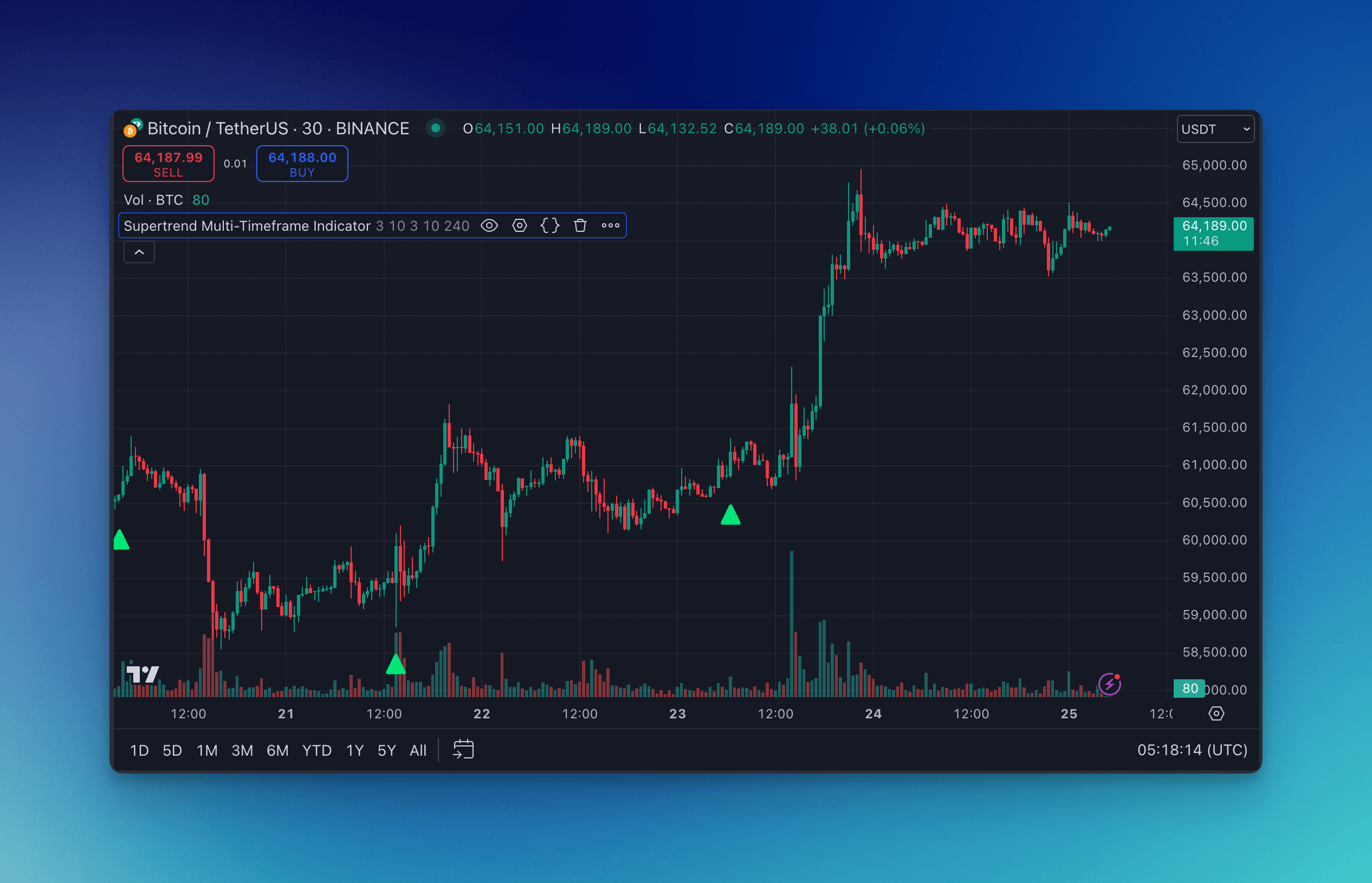
This visual feedback is crucial for strategy development. You can immediately see if your conditions are triggering too often (creating noise) or too rarely (missing opportunities).
Setting Up Smart Alerts That Actually Work
Here's something most traders struggle with: creating alerts that fire at the right time without overwhelming their phone with notifications. The key is building alerts around well-defined conditions rather than just price levels.
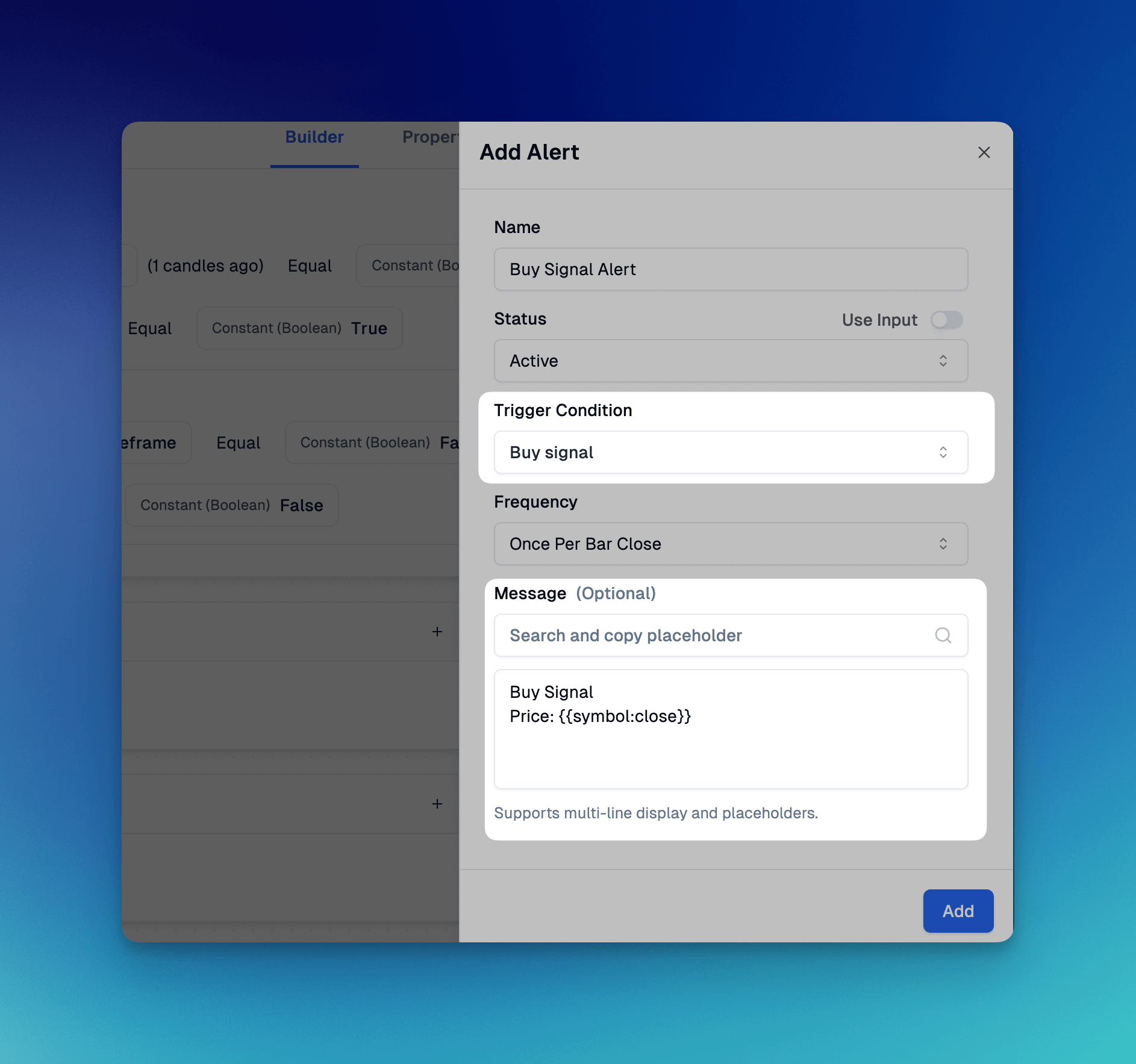
What's brilliant about condition-based alerts is that they can incorporate multiple factors simultaneously. Instead of getting an alert every time RSI hits 30, you get an alert when RSI hits 30 AND price is above the 50-day moving average AND volume is above average. Much more actionable, right?
Plus, here's a neat trick: even if you're on TradingView's free plan, you can pack multiple alert conditions into a single Pine Script indicator. This is way more efficient than trying to manage dozens of separate price alerts.
Once you've set up your alert condition, implementing it in TradingView is straightforward:

Why This Approach Actually Makes Sense
Look, I get it. Some traders think using visual tools instead of coding from scratch is somehow "cheating." But here's the thing – the goal isn't to become a Pine Script expert (unless that's your thing). The goal is to develop and test profitable trading strategies efficiently.
I've seen traders spend weeks trying to code a simple MACD crossover strategy when they could have built, tested, and refined multiple strategies in the same time using visual tools.
This approach is particularly powerful when you're exploring new strategy ideas. You can quickly prototype different combinations of indicators, see how they perform visually, and then decide which ones are worth deeper investigation.
If you're interested in learning more about the traditional coding approach, there are some excellent resources like this Pine Script tutorial guide that can help you understand the underlying mechanics.
Real-World Application Tips
Here are some practical tips I've learned from using condition editors:
Start Simple: Don't try to build a 10-condition strategy right off the bat. Start with 2-3 conditions and see how they perform.
Test Different Timeframes: A condition that works great on the 1-hour chart might be useless on the daily. Use the visual feedback to test across different timeframes quickly.
Pay Attention to False Signals: If your conditional plots are showing up constantly, your conditions might be too loose. Tighten them up.
Use Volume Confirmation: Adding volume conditions to your setups can significantly reduce false signals. Most condition editors make it easy to incorporate volume-based filters.
For those interested in more advanced techniques, exploring topics like Pine Script divergence can add another layer of sophistication to your conditions.
The Bottom Line
Building effective trading conditions doesn't have to be a coding nightmare. Visual condition editors democratize strategy development, making it accessible to traders who want to focus on market analysis rather than syntax debugging.
The key is to use these tools as a bridge – they help you understand the logic behind your strategies, which makes you a better trader overall. Whether you eventually dive deep into Pine Script coding or stick with visual tools, the important thing is that you're developing systematic approaches to the market.
Remember, the best trading strategy is one you actually understand and can execute consistently. Visual condition editors help ensure you really comprehend what your strategy is doing, which is half the battle in successful trading.
And if you're curious about taking your Pine Script skills to the next level, checking out resources on algorithmic trading strategies can provide valuable insights into more advanced implementation techniques.
The tools are there, the markets are waiting – now it's time to start building some killer trading conditions!