AI Futures Trading: What Machine Learning Means for Traders in 2026

AI futures trading is the use of machine learning, natural language processing (NLP), and neural networks to analyze market data, spot patterns, and execute or recommend trades. Unlike fixed-rule algos, these models keep learning from new data and adjusting. By 2026, this isn't just for hedge funds — I've been using AI tools on ES and NQ futures for about eight months now, and the main difference I see is how fast the model adapts when volatility spikes.
The core idea is straightforward: instead of hardcoding rules like "buy when RSI < 30," AI models train on years of price data, order flow, and sentiment signals. They find relationships a human would miss. And they keep updating those relationships as market conditions shift.
How AI Is Changing the Futures Market
AI isn't just automating old strategies — it's opening up new ways to trade futures that weren't possible a few years ago.
Real-Time Pattern Recognition
Machine learning models scan thousands of futures contracts simultaneously. They spot price relationships and detect trends forming before a human would catch them. I've seen this firsthand with crude oil — the model flagged a developing contango structure about 45 minutes before I noticed it on the chart.
Automated Risk Management
One of the biggest advantages is how AI handles risk dynamically. Instead of setting a static stop-loss, AI adjusts position sizing and stop levels as the market moves. It removes the emotional element from split-second decisions. I still override the AI's suggestion sometimes when I have a strong read on a support level, but it catches gaps I'd miss on a busy day.
Natural Language Processing for News and Sentiment
NLP tools digest earnings calls, Fed statements, and social media chatter in milliseconds. That speed matters when a CPI report drops or OPEC makes a surprise announcement. You get the context before most people finish reading the headline.
Predictive Pricing Models
AI models calculate fair value for futures contracts by weighing interest rates, dividends, supply data, and market sentiment simultaneously. Doing that manually is impractical. The model gives you a constantly updated baseline. Try Pineify's AI analysis tools to get fair value estimates in real time.
Key Benefits of AI in Futures Trading
| Benefit | Traditional Trading | AI Futures Trading |
|---|---|---|
| Data Processing Speed | Manual or semi-automated | Real-time, millisecond-level |
| Risk Management | Rule-based, static | Dynamic, self-adjusting |
| Sentiment Analysis | Limited or manual | NLP-powered, continuous |
| Pattern Recognition | Human-limited | Machine learning, 24/7 |
| Scalability | Limited by human bandwidth | Scales across thousands of contracts |
| Emotional Bias | High | Virtually eliminated |
AI solves two persistent problems in futures trading: getting information too late and letting emotions interfere with decisions.
For a step-by-step guide on testing your own futures strategies, check out our how to backtest a trading strategy guide.
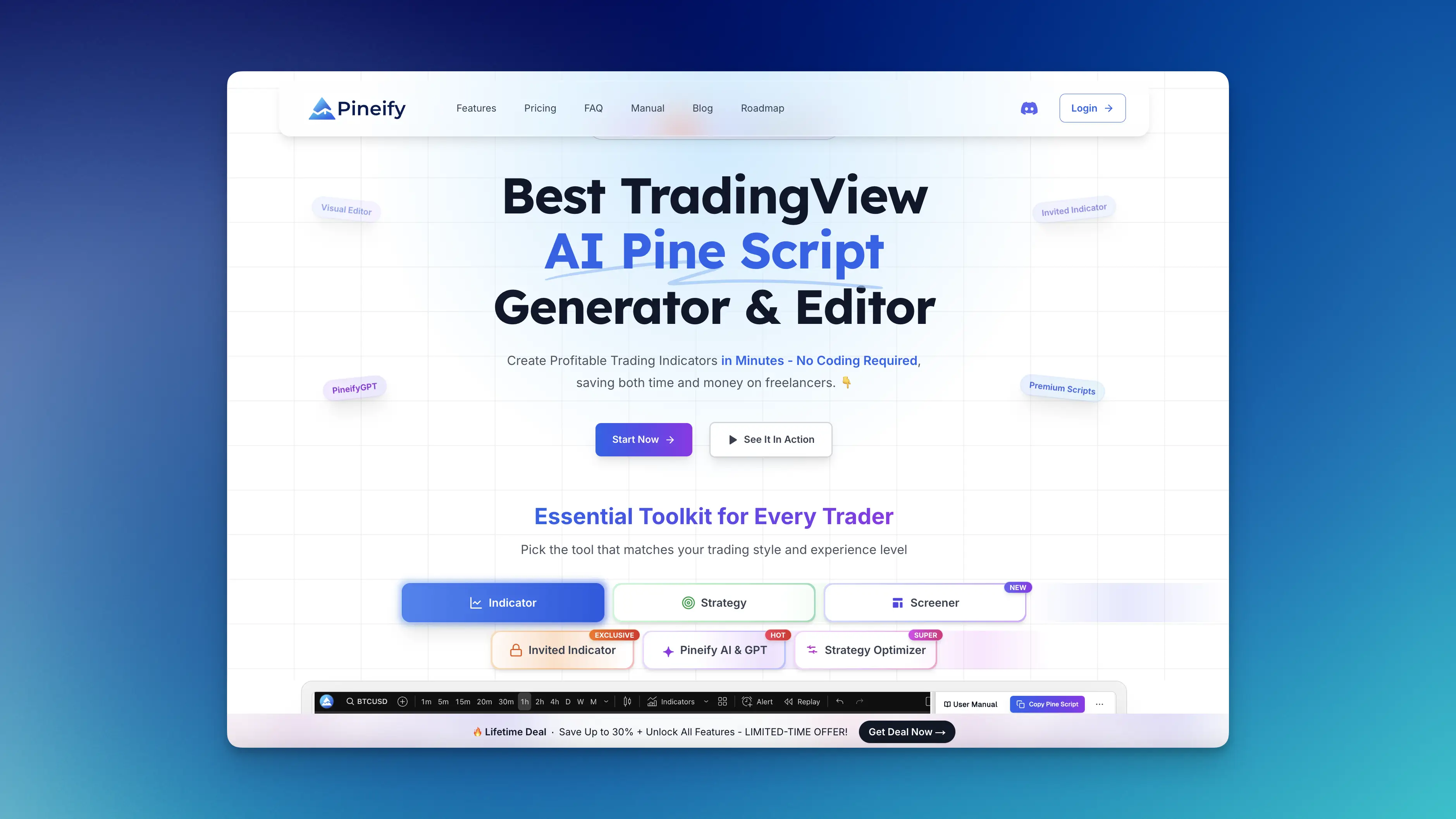
Speaking of removing emotional bias and speeding up decision-making — that's what Pineify was designed for. It's a 10-in-1 AI trading workspace used by over 100,000 traders. You can build custom indicators with the Visual Editor, analyze stocks with the AI Stock Picker, and track institutional moves with Market Insights (options flow, dark pool, congress trading). No coding needed, pay once, use forever. I'll be honest though — I haven't tested Pineify against a Bloomberg terminal for compliance-level research. It's built for retail and prosumer traders, not institutional desks.
The Rise of AI Finance Agents
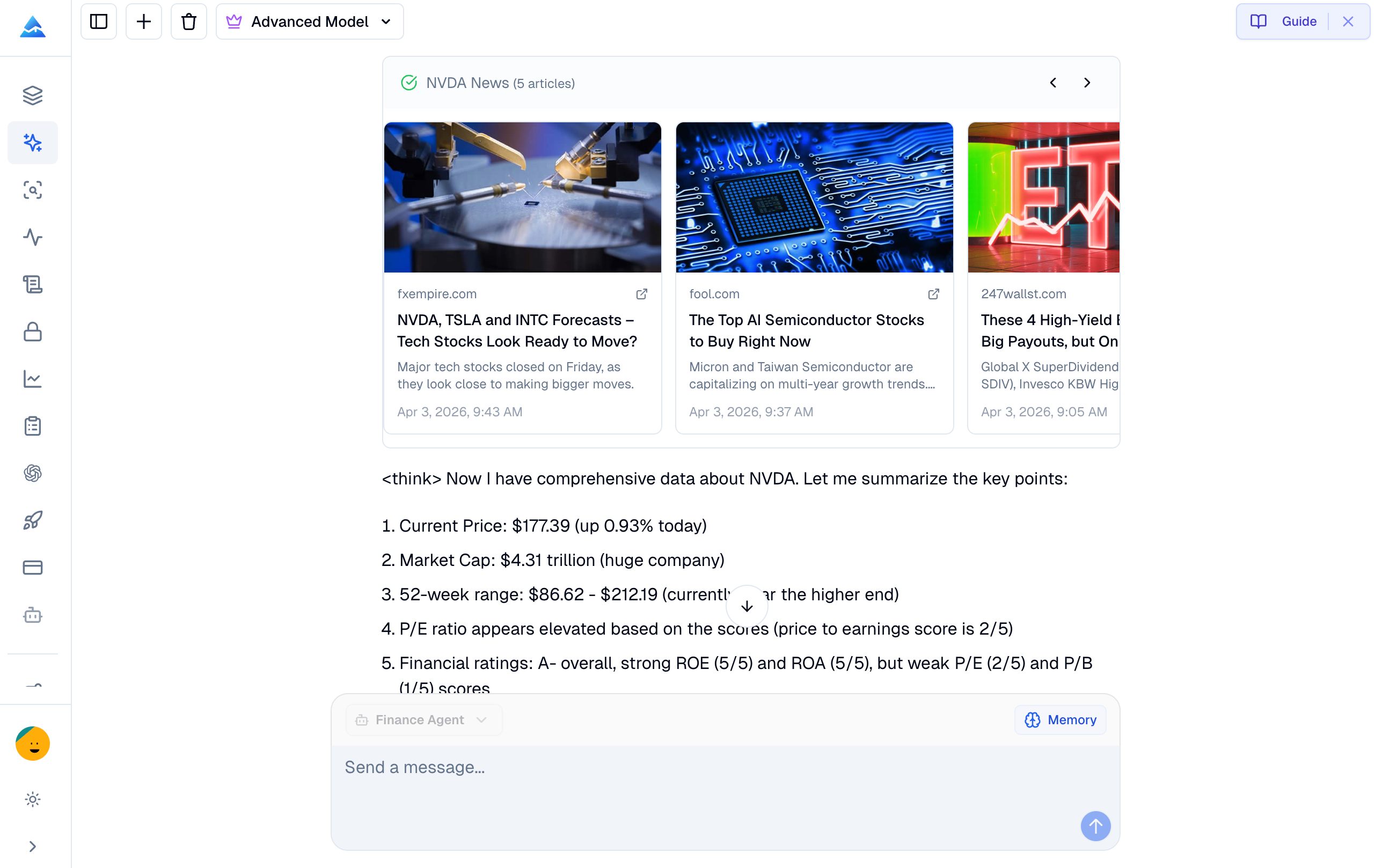
A newer evolution is the AI finance agent — systems that don't just crunch numbers but actively fetch live data, synthesize multiple streams, and deliver research in natural language.
These agents go beyond basic chatbots. They pull in options flow, dark pool data, institutional holdings, insider trades, and social sentiment from X and Reddit, then combine everything into clear recommendations. It's like having a research assistant that never sleeps.
Pineify Finance Agent: A Solid AI Tool for Futures Trading and Market Research
For traders who want an AI that actually helps with research, Pineify Finance Agent covers over 11,000 stocks and more than 400 crypto and forex pairs from 95+ real-time financial data sources. You talk to it like you would a colleague — no complex commands.
What Sets Pineify Finance Agent Apart?
- Real-time data, not stale replies – Unlike most AI chatbots trained on old data, Pineify pulls live quotes, financial statements, analyst estimates, and breaking news while the market is open.
- Dark pool and options flow insights – Shows off-exchange trades and unusual options activity — data institutional traders watch. You get that edge without a Bloomberg terminal.
- Track where the smart money goes – Insider trades, congress investments, institutional holdings, and ETF fund flows are all visible.
- Plain English stock screener – Describe what you're looking for in normal words, and the agent turns that into a screen based on financials, technicals, and sectors.
- Upload a chart, get an analysis – Screenshot a chart and upload it. The AI breaks down the technical patterns for you.
- Built-in research shortcuts – Skills like
/pineify-stock-deep-dive,/pineify-options-analysis,/pineify-market-pulse, and/pineify-earnings-breakdowngive structured research instantly.
One catch: the Finance Agent works great for research and signal spotting, but I wouldn't rely on it for fully automated execution. It's a research aid, not a trading bot.
AI Futures Trading Strategies You Can Actually Use Today
If you're trading ES, NQ, crude oil, or gold futures, these are the strategies traders are running in 2026:
-
Momentum trading
AI watches for steam building through volume spikes, order flow changes, or sentiment shifts. It catches the move early and gets you in before most traders notice. -
Mean reversion
Machine learning flags when a contract strays too far from its average price. If the deviation is statistically significant, the system marks it as a high-probability reversal zone. -
Macro event trading
NLP tools scan economic calendars and news wires in real time. Position yourself ahead of CPI reports, Fed rate decisions, or OPEC announcements without refreshing your browser constantly. -
Spread trading
AI compares related futures — crude oil versus natural gas, ES versus NQ — and finds when their normal relationship breaks. When an anomaly appears, it suggests a spread trade with historically strong odds of convergence. -
Sentiment-driven trading
By pulling sentiment from social media (X, Reddit) and financial news, AI helps gauge whether the market is bullish, bearish, or uncertain before you take a directional bet.
Challenges and Risks of AI Futures Trading
AI helps, but it's not perfect. Here are the risks I've run into:
- Overfitting: Train AI too heavily on past data and it memorizes old patterns instead of learning general rules. When the market shifts, that model fails badly. I saw this happen with a model that crushed it in the 2023 bull run but bled during the August 2024 correction.
- Flash crash risk: When lots of AI systems act the same way at once, they amplify price swings. Algorithmic flash crashes have happened before.
- Data quality matters: Bad or delayed data produces bad advice. This isn't a theory — I've seen delayed order flow data cause false signals in real trades.
- No guarantee of profit: The best AI can't predict futures prices with certainty. You can still lose money, including your full investment.
Good AI trading platforms, like Pineify Finance Agent, are honest about these limits. They're research aids, not magic profit machines.
How to Get Started With AI Futures Trading
Getting started is simpler than you'd think:
- Pick an AI finance tool – Pineify Finance Agent gives you live data, options flow, and AI-generated suggestions.
- Connect to a futures broker – NinjaTrader, Interactive Brokers, or Alpaca support API connections so your AI agent feeds you signals. If you run into issues placing orders, check this guide on common reasons why orders get rejected on TradingView.
- Decide your style – Momentum, mean reversion, macro events, or spreads — the AI helps spot setups that match your approach.
- Test first – Run your strategy against historical data before risking real money. Pineify can analyze your backtest results to show if your approach holds up.
- Start small – Treat AI recommendations as a second opinion, not a crystal ball.
Frequently Asked Questions
What is AI futures trading?
AI futures trading uses machine learning, NLP, and neural networks to analyze market data, identify patterns, and either execute trades automatically or give you useful recommendations. Unlike rule-based systems, AI models keep learning from new data and adapting to changing conditions.
What tools do I need to start AI futures trading?
You need an AI-powered finance tool like Pineify Finance Agent, a futures broker with API support (NinjaTrader, Interactive Brokers, or Alpaca), and a trading strategy. Start by connecting your tools, testing with historical data, and scaling up gradually.
How is AI futures trading different from traditional algorithmic trading?
Traditional algorithmic trading follows fixed rules and doesn't adapt. AI futures trading uses machine learning models that learn from live data, recognize patterns as they evolve, and adjust predictions over time. That makes AI more adaptable to changing volatility and market regimes.
Which futures markets can AI help trade?
AI works with virtually any futures market: stock index futures (ES, NQ), commodities (crude oil, gold, natural gas), forex futures, and cryptocurrency futures. Tools like Pineify Finance Agent provide real-time data and sentiment analysis across all these markets.
What are the main risks of AI futures trading?
The big ones are model overfitting, flash crash risk from too many AI systems reacting at once, data quality issues, and the simple fact that no AI guarantees profits. Use AI as a research aid alongside proper risk management, not as a profit machine.
Disclaimer: This article is for informational and educational purposes only. It is not financial advice. Always consult a licensed financial advisor before making trading or investment decisions. Futures trading involves substantial risk of loss.