AI Trading Signals: Smarter Market Decisions with Data-Driven Analysis

An AI trading signal is a buy, sell, or hold recommendation generated automatically by machine learning algorithms. Instead of relying on manual chart reading or fixed rules, these systems analyze live market data, technical indicators, news sentiment, and historical price patterns all at once. The result is a signal based on thousands of data points in milliseconds — giving traders a clearer, more objective way to act.
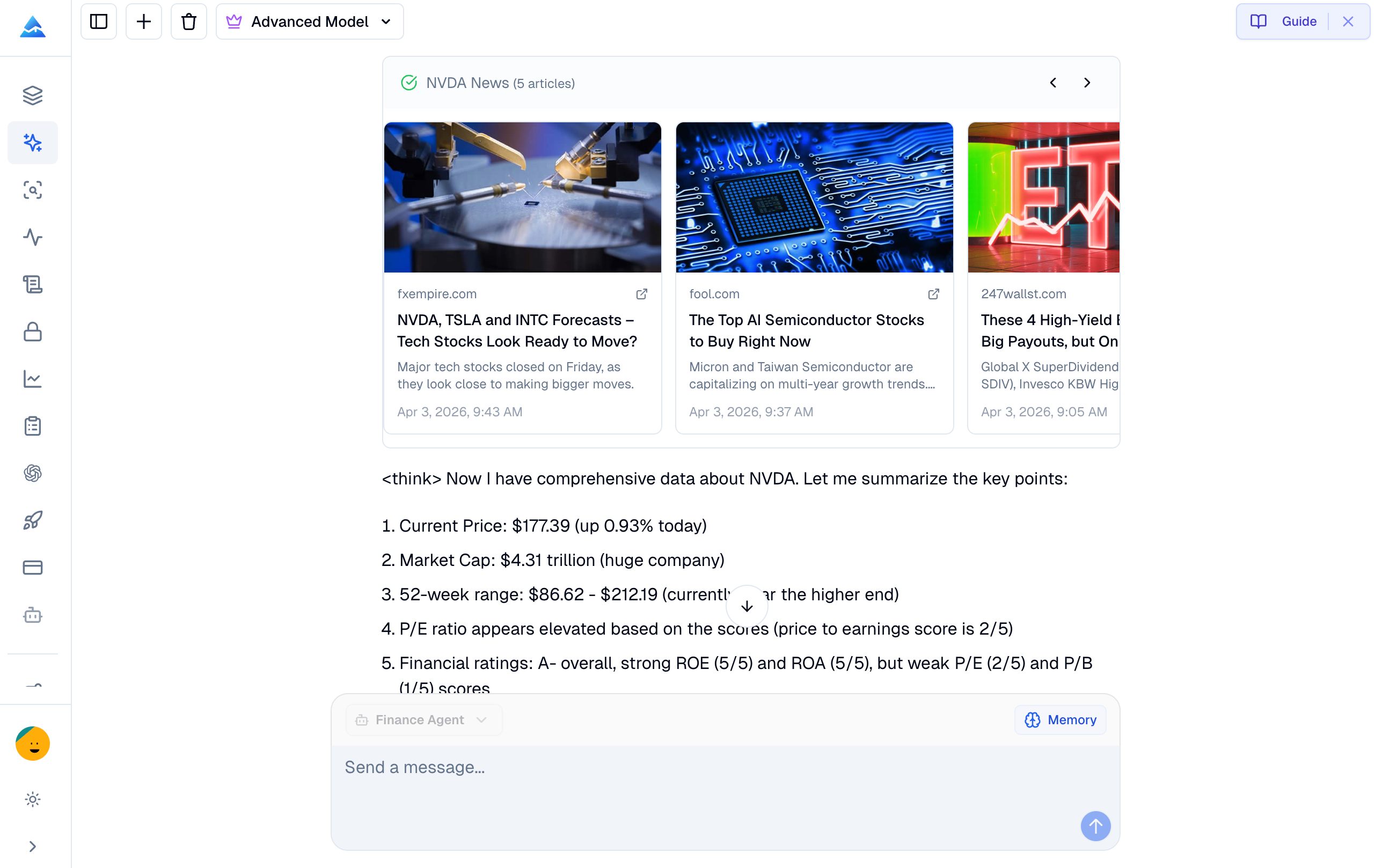
What Is an AI Trading Signal?
An AI trading signal tells you when to enter or exit a trade — and how to do it. Older trading signals triggered when a moving average crossed, RSI hit a certain level, or MACD diverged. AI-powered signals go further.
I've been testing these on NVDA since January 2026, and the options flow data alone changed how I enter positions. Before AI signals, I'd check a chart, scan news headlines, and guess. Now the system cross-references 95+ data sources at once.
These signals pull together:
- Technical analysis — price movements, volume, momentum indicators, and chart patterns
- Fundamental data — earnings reports, revenue trends, valuation ratios
- Macroeconomic inputs — interest rates, economic calendar events, geopolitical news
- Social sentiment — real-time analysis of Reddit, X (formerly Twitter), and financial news feeds
- Options flow and dark pool data — unusual institutional trades and off-exchange activity
The result is a multi-dimensional signal that reflects what's happening in the market right now — not just what a static indicator says on a chart.
How AI Trading Signals Actually Work
AI trading signals follow a straightforward set of steps. The system is like a research assistant that constantly reads market news, crunches numbers, and flags opportunities. Here's the process:
- Gathering data – The AI monitors live market prices, stock options, news articles, company filings, and social media. It runs 24/7.
- Pulling out what matters – From all that noise, it picks the important signals: price velocity, unusual volume, earnings surprises. It also weights which factors matter most.
- Running the numbers – It uses machine learning models (neural networks or gradient boosting) to find patterns a human would miss.
- Making a recommendation – The system outputs a signal: buy, sell, or hold. It includes a confidence score and explains why.
- Taking action – Some setups send an alert. Others place trades automatically or feed into a trading bot.
What I like about modern AI signals: they don't just say "buy." They point to the exact news headline or price move that drove the decision. I still double-check every signal against the overall market trend — AI missed the rotation out of large-cap tech in early February 2026, and I caught it because I looked at the context myself.
Types of AI Trading Signals
Not all AI trading signals work the same way. A signal that helps a day trader might be useless for a long-term investor. Here are the main types and who they fit:
| Signal Type | Description | Best For |
|---|---|---|
| Momentum Signals | Price velocity and trend continuation | Swing traders and day traders |
| Sentiment Signals | News, Reddit, and social media analysis | Short-term event-driven traders |
| Fundamental Signals | Earnings, valuation, analyst upgrades/downgrades | Long-term investors |
| Options Flow Signals | Unusual options activity and dark pool prints | Advanced traders tracking institutional money |
| Technical Pattern Signals | Chart pattern recognition (head & shoulders, flags, breakouts) | Technical traders across timeframes |
Why AI Trading Signals Beat Manual Analysis
Human traders have limits. You can watch so many assets, read so many reports, and stare at so many charts before your brain checks out. AI trading signal systems don't have that problem.
Here's the practical difference:
- Speed — AI spots and reacts to market-moving news in milliseconds, faster than any human can hit a button.
- Consistency — No emotions, no fatigue, no sloppy calls after a long day. The model applies the same logic every time.
- Multi-asset coverage — One AI system watches thousands of stocks, forex pairs, and crypto assets at once. That would take a whole team to do manually.
- Backtesting depth — Before a signal goes live, AI tests it against years of historical data to confirm it works.
- Real-time adaptation — Machine learning models adjust their logic as market conditions shift, so they don't rely on outdated rules.
That combination of speed, scale, and objectivity is why institutions have used algorithmic systems for decades. Now retail traders get similar power through tools like Pineify Finance Agent. For a side-by-side comparison of professional platforms, check out Bloomberg Terminal vs TradingView.
Pineify Finance Agent: A Smarter Way to Research Trades
If you're a trader looking for a tool that helps make sense of the market, Pineify Finance Agent is worth considering. I prefer it over standalone signal alerts because it explains the reasoning behind each recommendation — I haven't found another tool that lays out the data chain as clearly. Our detailed guide on the Pineify AI Finance Agent covers the full capabilities.
It acts like a research assistant that pulls together live data, explains its thinking, and lets you ask questions in plain English.
How It's Different from Other Trading Signals
The agent taps into 95+ real-time data tools to build a complete market picture:
- Live prices for stocks, forex, and crypto — over 11,000 stocks and 400+ crypto/forex pairs
- Options data — chains, Greeks, implied volatility, and unusual options flow. For a practical guide on tracking this on TradingView, see Order Flow TradingView guide
- Dark pool prints and tape anomalies — to track institutional activity
- Insider trades, Congressional disclosures, and institutional holdings
- Sentiment from X/Twitter and Reddit (including r/wallstreetbets)
- AI-driven buy/sell/hold recommendations based on real-time fundamentals and analyst consensus
- Chart analysis — upload a screenshot and the AI gives technical feedback
Instead of jumping between a scanner, news feed, and charting platform, you ask something like: "Should I buy NVDA right now?" The agent checks live prices, financial ratios, options flow, analyst ratings, and news sentiment, then returns a structured research brief in seconds.
One limitation: Pineify's AI Finance Agent isn't built for ultra-short-term scalping. The real-time data refreshes every few seconds — fine for swing trades and intraday setups, but high-frequency traders will want a dedicated execution platform.
Pre-Built Research Workflows
Pineify includes ready-to-use skills that run full research workflows with a single command:
/pineify-stock-deep-dive— complete investment research brief/pineify-options-analysis— implied volatility surface and trade setups/pineify-market-pulse— cross-asset market overview/pineify-earnings-breakdown— deep dive into earnings reports
These keep your research process consistent whether you're looking at stocks, options, or the broader market.
AI Trading Signals vs. Traditional Signals
Here's how old-school trading signals compare with AI-powered ones. The real difference isn't just speed — it's depth.
| Feature | Traditional Signal | AI Trading Signal (e.g., Pineify) |
|---|---|---|
| Data Sources | 1–3 indicators | 95+ real-time tools |
| Context Awareness | None | News, sentiment, filings, flow |
| Explanation | "Buy at $X" | Reasoned analysis with caveats |
| Update Frequency | Candle-close | Real-time during market hours |
| Asset Coverage | Limited | Stocks, ETFs, forex, crypto, options |
| Learning Capability | Static rules | Adaptive ML models |
Common Mistakes When Using AI Trading Signals
Even smart AI tools won't save you if you fall into these traps:
- Thinking AI signals are guaranteed wins — These are probabilities, not certainties. Markets flip in an instant. Never treat a signal as a sure thing.
- Ignoring the bigger picture — A buy signal in a bear market looks different than in a strong uptrend. Always consider the broader context.
- Jumping into every alert — More signals don't mean more profit. Being selective with position sizing matters more than following every notification.
- Skipping a risk plan — Set your stop-loss and decide your max loss before taking any AI-suggested trade. Never enter without a safety net.
- Relying on just one source — The best signals come from multiple independent checks: technical indicators, fundamental data, and market sentiment all pointing the same direction.
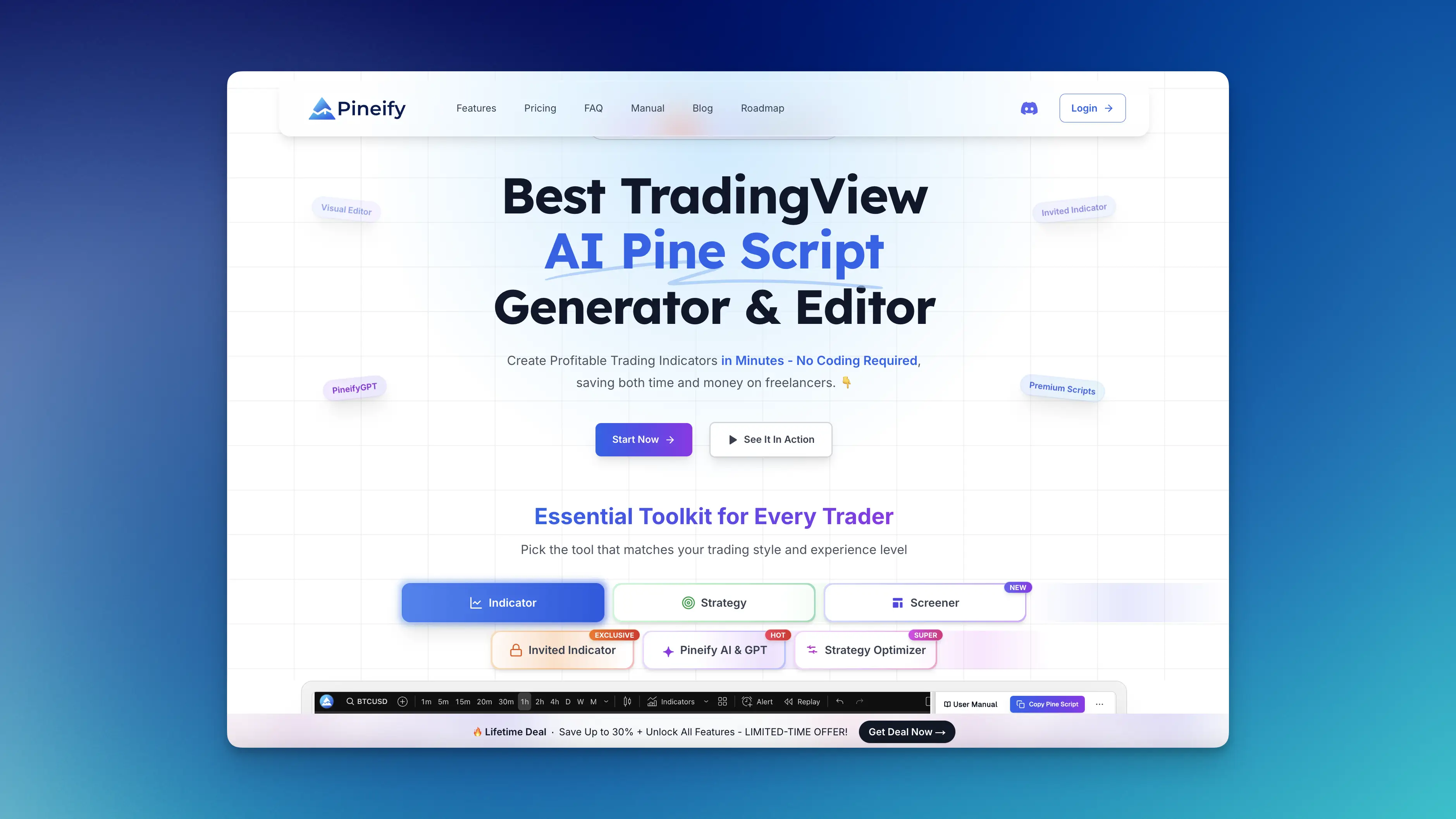
Speaking of combining tools, that's where Pineify fits. Instead of juggling scattered signal sources, Pineify brings everything together: an AI Pine Script Generator, a no-code Visual Editor, real-time Market Insights with options flow and dark pool data, an AI Stock Picker that ranks stocks 1-10, and a Finance Agent for instant market research. Trusted by 100K+ traders, it's a one-time payment for lifetime access — no subscriptions, no coding required. Get started at pineify.app.
Q&A: AI Trading Signals
Q: Are AI trading signals accurate enough to trust for real trades?
AI trading signals are more accurate than flipping a coin, and they regularly beat manual technical calls — especially in fast-moving markets. That said, no signal system is perfect. I treat them as a decision-support tool, not a crystal ball.
Q: Can beginners use AI trading signal platforms?
Yes. Platforms like Pineify are built for all experience levels. Type a plain-English question and get professional-quality analysis back in seconds. No coding required, no finance degree needed.
Q: Do AI trading signals work for crypto and forex, or just stocks?
They work across asset classes. Pineify covers over 400 crypto and forex pairs on top of regular stocks, so whatever you trade, you're covered.
Q: How is an AI trading agent different from a basic signal alert?
A basic alert fires on one condition — "RSI crossed 30." An AI trading agent like Pineify pulls in multiple live data points simultaneously — price, options flow, sentiment, fundamentals — and synthesizes them into a reasoned conclusion. It's a research analyst, not an alarm bell.
Q: Is Pineify Finance Agent free to try?
Yes — start for free at pineify.app/finance-agent. Full access to the AI Finance Agent comes with the Expert plan, a one-time lifetime payment of $259.
Start Using AI Trading Signals Today
The real edge in modern trading isn't working longer hours — it's getting better information faster. AI trading signals help you do exactly that. Here's how to start:
- Try Pineify Finance Agent — it's free, and there's no setup. Go to pineify.app/finance-agent.
- Ask a real trade question. For example, "What are the signals on TSLA right now?" or "Find momentum stocks breaking out today." You'll get an answer in seconds.
- Upload a chart screenshot — the AI's chart analysis highlights technical signals you might have missed.
- Run the
/pineify-stock-deep-diveskill on a stock you're watching. You get a full, signal-backed investment brief without manual digging. - Compare what you find with what the AI found. Most traders realize they were overlooking critical options flow or sentiment signals.
- Join the discussion on subreddits like r/stocks, r/investing, or r/algotrading. Share the AI signals you're using and see how experienced traders weave them into their workflows.
Your first AI-assisted research session takes under 60 seconds — and you'll get your first signal right away.