How to Trade Synthetic Indices on MT5: Complete Setup, Strategies & Risk Management

· 13 min read
Pineify Team
Pine Script and AI trading workflow research team

Learn how to trade synthetic indices on MT5. Step-by-step setup guide, best strategies for Volatility, Boom & Crash indices, risk management tips, and broker recommendations for beginners and advanced traders.

How to Trade Synthetic Indices on MT5: Complete Setup, Strategies & Risk Management

How to Trade Synthetic Indices on MT5 (A Simple Walkthrough)

If you've been curious about synthetic indices, you're not alone. They're becoming really popular among retail traders — and honestly, it makes sense. These instruments run 24/7, are based entirely on math, and don't care about news or politics. That means you get a clean, structured environment for technical trading, without the usual surprises.

In this guide, I'll show you exactly how to trade synthetic indices on MT5 — from setting up your account to using strategies that actually work. No fluff, just practical steps.


What Are Synthetic Indices?

Synthetic indices are artificial financial instruments created by an algorithm. They're designed to mimic how real markets move — but unlike forex, stocks, or commodities, they aren't tied to any country's economy or company earnings. No central bank decisions, no political drama, no surprise news events. Their price comes from a Random Number Generator (RNG) combined with built-in volatility formulas. The result? Steady, continuous price movement in a controlled setting.

Here's what makes them stand out:

  • Always available — Trade any time, even on weekends and holidays
  • No news shocks — Economic calendars and geopolitical events don't affect prices at all
  • Stable volatility — The algorithm keeps price movement structured and predictable
  • Leverage is an option — You can use high leverage, though that also means higher risk
  • Works perfectly with MT5 — Full support for Expert Advisors (EAs), custom indicators, and bots

Because price is driven by math — not supply and demand — technical tools like support/resistance levels, trendlines, RSI divergences, and moving average crossovers tend to be more reliable than on news-sensitive instruments. That's a big reason many traders prefer them.

Synthetic Indices vs. Forex: Key Differences

A lot of traders who start with synthetic indices come from a forex background. Both use leveraged CFDs on MT5, but there are some big structural differences you’ll want to know about before putting any money in:

FeatureSynthetic IndicesForex Trading
Trading Hours24/7 including weekendsMarket session-based
News SensitivityNot affected by newsHighly sensitive
Volatility TypeAlgorithm-driven, consistentChanges with conditions
Weekend TradingAvailableUsually closed
Best ForTechnical/scalp tradersMacro/fundamental traders
Price DriversMathematical modelsSupply, demand, global events

For beginners who find forex news events overwhelming, synthetic indices give you a cleaner, more technically-focused place to start.

Types of Synthetic Indices on MT5

Before you jump into your first trade, it helps to know what instruments are out there and how they behave. The most common ones from brokers like Deriv and ThinkMarkets include:

  • Volatility Indices (V10, V25, V75, V100) — These keep a steady level of ups and downs (10%, 25%, 75%, 100%). They're great if you like following trends. If you want to deepen your understanding of price movement, check out this volume analysis guide.
  • Boom and Crash Indices — They create predictable upward (Boom) or downward (Crash) jumps after a certain number of ticks. Scalpers tend to like them.
  • Jump Indices — These mix calm price movement with occasional sudden bursts. Pretty good for someone just starting out.
  • Step Indices — They move in fixed pip steps, which makes them handy for range trading and quick in-and-out trades.

Best Synthetic Indices by Experience Level

InstrumentVolatility LevelDifficultyBest Strategy
Volatility 10 IndexLowBeginnerPractice reading charts
Volatility 25 IndexModerateBeginner–IntermediateChart patterns, support/resistance
Jump IndicesModerateBeginner–IntermediateTrade the volatility bursts
Boom 1000Medium–HighIntermediateScalp the upward spikes
Crash 500Medium–HighIntermediateReversals and spike trades
Volatility 100 IndexHighIntermediateFollow intraday trends
Volatility 75 IndexVery HighAdvancedSwing trading, big moves

How to Trade Synthetic Indices on MT5: Step-by-Step Setup

Getting started doesn’t take much. Here’s the full process from scratch to your first live trade:

Step 1: Pick a Broker That Supports Synthetic Indices

Not every MT5 broker offers synthetic indices. The most well-known platforms include Deriv (the original, often called DMT5), ThinkMarkets (now offers high leverage options up to 2500:1), FXPrimus, and HMarkets. Choose a broker that’s regulated, has clear fees, tight spreads, and fast trade execution.

Step 2: Open and Verify Your Account

Sign up on your chosen broker’s website and go through identity verification (also called KYC). Most brokers will ask for a government-issued ID and a proof of your address. If you’re using Deriv, you’ll need to create a separate synthetic indices MT5 sub-account inside your main Deriv dashboard — your standard Deriv account can’t directly access MT5 synthetic trading.

Step 3: Add Funds to Your Trading Account

Move money from your main wallet to your MT5 synthetic indices account. Most brokers let you start with as little as $100, but if you start that small you’ll need to be very careful with how much you risk per trade. Many brokers also offer demo accounts so you can practice with fake money before you go live.

Step 4: Download and Install MetaTrader 5

Get MT5 from your broker’s website or directly from MetaQuotes. It’s free and available on:

  • Windows and macOS (desktop)
  • Android and iOS (mobile)
  • Web browser (no download needed)

Step 5: Log In to Your MT5 Synthetic Indices Account

Open MT5, click File → Login to Trade Account, and enter your details:

  • Login ID (your broker gives you this after you open the account)
  • Password (the one you set up)
  • Server (e.g., "Deriv Limited" or your broker’s specific server name)

Step 6: Add Synthetic Indices to Market Watch

Once you’re logged in:

  1. Right-click in the Market Watch panel (View → Market Watch)
  2. Choose Symbols
  3. Open the Synthetic Indices or Derived Indices section
  4. Double-click the instrument you want or drag it into Market Watch

Step 7: Open a Chart and Add Your Indicators

Right-click the instrument in Market Watch and pick Chart Window. From there:

  • Choose your preferred timeframe (M1 if you like quick trades, H1–H4 if you prefer holding positions longer)
  • Add technical indicators like RSI, Moving Averages (EMA 20/50/200), Bollinger Bands, or MACD
  • Draw trendlines, support/resistance levels, and Fibonacci retracements

Step 8: Place Your Trade

When your setup gives you a signal:

  1. Double-click the instrument or press F9 to open a New Order window
  2. Set your lot size (volume)
  3. Choose Buy (going long) or Sell (going short)
  4. Enter your Stop Loss and Take Profit levels
  5. Click Buy or Sell to place the trade

Here is the blog section content with the Pineify promotion naturally integrated.

Best Strategies for Synthetic Indices on MT5

Synthetic indices run on algorithms, which makes them a great fit for technical trading strategies. Here are a few approaches that tend to work well:

Trend Following

You can use EMA crossovers combined with RSI confirmation to ride longer moves. This works especially well on Volatility 75 and V100 Index. For more advanced setups, explore TradingView strategies for 2025 that you can adapt to synthetic indices.

Breakout Trading

Look for price consolidation patterns like flags or rectangles. When you see a high-momentum candle break out, that’s your signal. Because synthetic indices have steady volatility, these breakouts tend to be clean and reliable.

Scalping

If you prefer quick trades, try the M1 or M5 timeframes on Boom and Crash indices. The goal is to catch spike candles with tight stop losses.

Range Trading

Step Indices move in predictable steps, so they’re ideal for range-bound strategies. Use oscillators like Stochastic or RSI to spot entry points.

Trading StyleRecommended TimeframeBest Instruments
ScalpingM1 / M5Boom 1000, Crash 500, Step Index
Day TradingM15 / H1Volatility 75, Volatility 25
Swing TradingH4 / DailyVolatility 100, Jump Indices

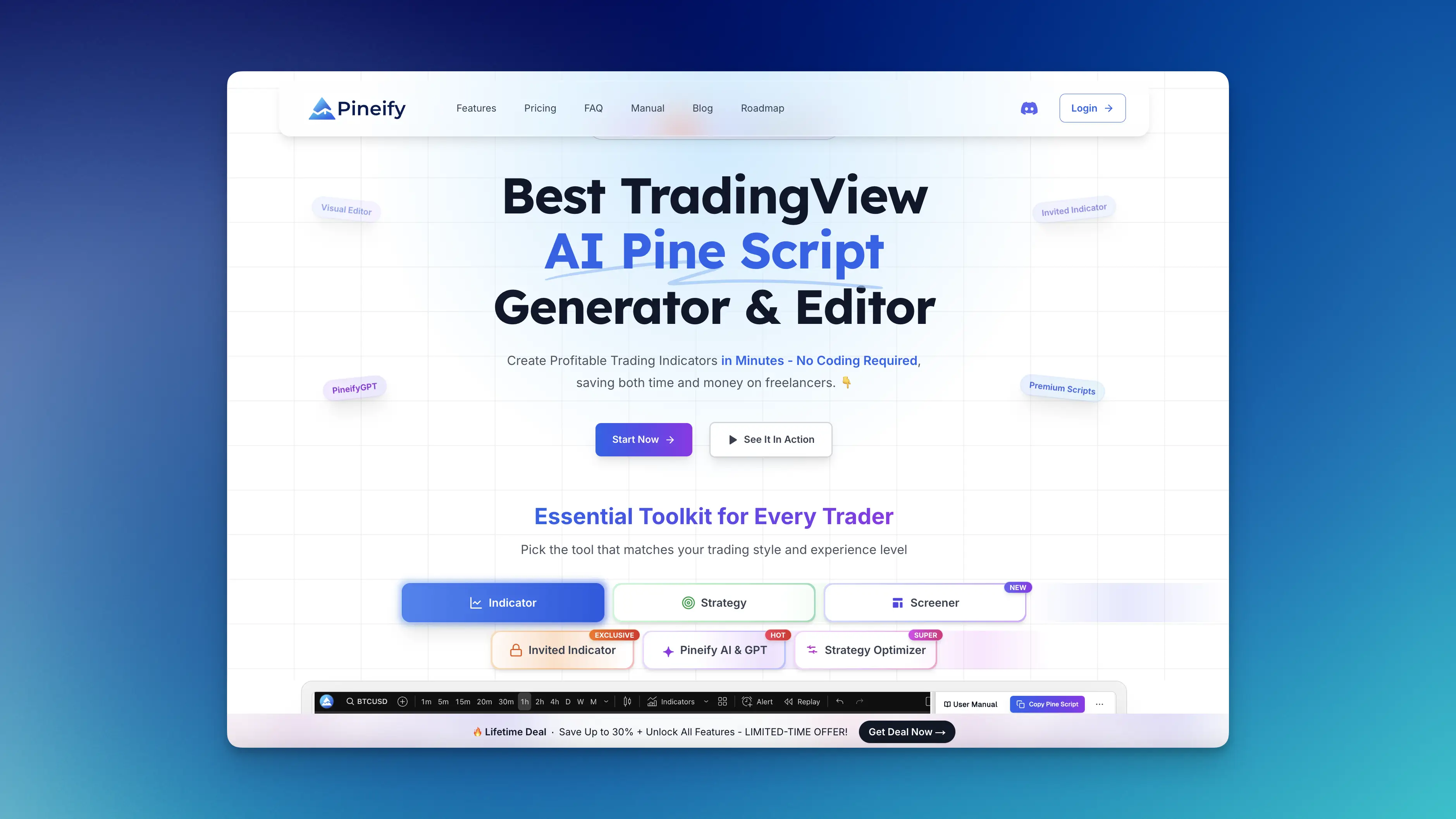
💡 Pro Tip: Want to build, backtest, and optimize these exact strategies without writing a single line of Pine Script? Pineify is the ultimate 10-in-1 AI trading workspace trusted by over 100,000 traders. Use the visual editor or AI agent to generate error-free trading indicators and strategies in minutes.

Pineify Website

Risk Management: Protecting Your Capital

Synthetic indices can move fast and in unexpected ways. If you don't manage your risk carefully, even a solid strategy can lose you money. Here are a few rules that I never break, and you shouldn't either:

  • Only risk 1–2% of your account on any single trade. This way, if a few trades go against you, you still have enough capital to keep trading and recover.
  • Always set a Stop Loss before you open a trade. No exceptions. It's like wearing a seatbelt — you only need it when things go wrong, but you'll be glad you had it.
  • Don't get carried away with leverage. Just because your broker offers 2500:1 doesn't mean it's a good idea. Higher leverage multiplies both gains and losses, and that can wipe you out fast.
  • Start with a demo account. Before you put real money at risk, spend time learning how your chosen synthetic index behaves. Get familiar with its patterns, volatility, and typical movements. An MT4 backtesting guide (the principles apply to MT5 as well) can help you test your approach thoroughly.
  • Keep a trading journal. Write down each trade: why you took it, what happened, and how you felt. Over time, you'll spot patterns in your decisions and emotions that can help you improve.
  • Stick to a schedule. Synthetic indices trade 24/7, but that doesn't mean you should trade around the clock. Overtrading is one of the quickest ways to drain your account. Plan your sessions and step away when you're done.

Common Mistakes Beginner Traders Make

Knowing what to watch out for can save you a ton of time and money.

  • Jumping in without a demo account — You wouldn't practice for a driving test on the highway. Same goes for trading: live trading before you understand how an instrument moves is asking for trouble.
  • Not using a stop loss — This is the #1 reason people blow up their accounts. It's like driving without brakes.
  • Trying to win back losses — After a bad trade, you increase your bet size to "make it back faster." That's the quickest way to wipe out your account.
  • Starting with Volatility 75 — This thing moves fast. Learn on calmer instruments first, or you'll get shaken out before you know what hit you.
  • Maxing out leverage — Big leverage sounds exciting, but without knowing how pip values change with lot size, you can lose everything in seconds.
  • Not checking the broker — Always confirm your broker is licensed by a real financial authority. If they aren't, your money is at risk.

Q&A: Frequently Asked Questions

Q: Can you trade synthetic indices on MT4?
No — synthetic indices only work on MT5 (MetaTrader 5). If you’re using Deriv or most other brokers that offer these instruments, they won’t support MT4 for synthetic index trading.

Q: Can I trade synthetic indices with just $100?
Yes, you can, but you’ll need to be really careful with your risk management. A $100 account means you can only take small positions, which makes it better for learning and testing strategies than trying to make a profit.

Q: Are synthetic indices available on weekends?
Absolutely. One of the biggest perks is they’re open 24/7 — including Saturdays and Sundays when regular markets are closed.

Q: Do economic news events affect synthetic indices?
Nope. Synthetic indices are purely algorithm-driven, so they aren’t impacted by economic calendars, central bank decisions, earnings reports, or world events.

Q: Which synthetic index is best for beginners?
Most people recommend starting with Volatility 10 or Volatility 25. They move at a slower pace and have more predictable price action, which makes them easier to get the hang of.

Q: Can I use Expert Advisors (EAs) on synthetic indices?
Yes, definitely. MT5 supports automated trading bots and EAs for synthetic indices, so they’re a popular pick for algorithmic traders who want to test or run strategies automatically.

Next Steps: Start Your Synthetic Indices Journey

Now that you've got a solid handle on how to trade synthetic indices on MT5, here's a simple, no-pressure plan to build your confidence step by step.

  1. Open a demo account with a regulated broker — try Deriv, ThinkMarkets, or FXPrimus. Spend at least two weeks just poking around different instruments, getting a feel for how they move.
  2. Pick one index and stick with it until you know it inside out. Start with Volatility 10 or Volatility 25 — save the wild swings of Volatility 75 for later.
  3. Build a clean, simple strategy using maybe one or two indicators you already understand — like an EMA and an RSI. Test it over and over on the demo before you even think about real money.
  4. Go live, but go tiny. Use micro lots and risk no more than 1% of your account per trade. Only scale up after you're consistently profitable on the demo for a few weeks.
  5. Find your people. Join a trading community — forums, YouTube channels, Discord groups focused on synthetic indices. You'll learn way faster by talking with traders who've already made the mistakes you're about to make.

Synthetic indices reward discipline, patience, and a solid technical foundation. The market runs 24/7, so there's never any rush to force a trade. Your next setup will always come around.

Have you started trading synthetic indices yet? Drop your experience or any questions in the comments below — and if this guide helped, share it with another trader who's just beginning their journey.